

Step 1 of 3
Measure a side
Lay the motifs flat. Identify corners and count usable joining spaces between them.
Turn repeated squares, stars or lace units into an edge that stays flat.
Work the steps ↓ Browse 27 techniques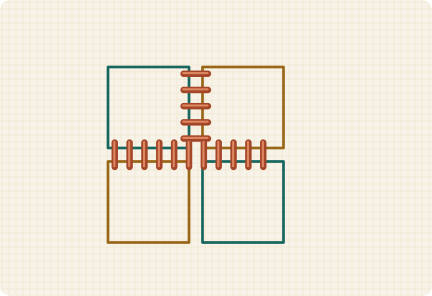
Lay the motifs flat. Identify corners and count usable joining spaces between them.
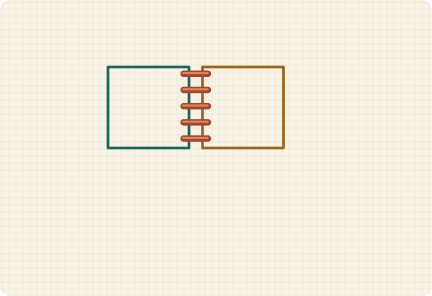
Pin two corners together, then match the midpoints. Distribute any small difference over the edge before joining.
Slip stitch or sew matched spaces together. Add the next pair and inspect the crossing where four corners meet.
An extra join or too many stitches may occupy the shared corner. Unpick just the junction and redistribute.
It can be made on a row of trebles, just as well as on point lace braid, or on a mignardise, after you have raised the picots of it by single and chain stitches.
1st scallop—7 plain, 5 chain, join to the 4th chain; on the 5th chain: 6 plain; on the 8th chain: 3 plain.
2nd scallop—on the 10 chain: 7 plain, 5 chain, join to the 4th chain = on the 5 chain: 6 plain = on the 10 chain, 5 plain, 5 chain, join to the 4th chain, 6 plain, 5 chain, join to the 4th chain, 6 chain, 1 plain on the 10th chain.
Work a foundation of tall stitches on the braid, separated by one or two chains to suit its width. Test five-chain arches on that foundation and mark the anchors before working a longer length.
1st row—3 plain close together, in the braid; * 13 chain, join to the 1st plain. On each of the first 6 chain; 1 plain; = on the 7th chain: 3 plain, then on the other chain stitches: 6 plain. In the braid: 7 plain and repeat from *.
2nd row—* miss 2 plain of the first row, 5 plain to reach the 2nd stitch added in the first row, 4 plain on the 2nd added stitch, 4 plain on the next stitches. Repeat from *.
For an insertion, drop the thread after the 2nd of the 4 stitches that are to be made at the point, then put the needle into the stitch of the finished stripe, take up the thread again, draw it through the stitch and proceed to the second side of the scallop.
Begin by raising the picots on both sides of the mignardise by: 1 plain stitch and 1 chain.
The rows of crochet work between, consist of: 1 treble on 1 chain, 4 chain, miss 2 picots of the mignardise, 1 treble between the 3rd and 4th picot.
Work the edge in two rows.
1st row—1 treble between 2 picots, 3 chain, miss 2 picots, 1 treble.
2nd row—1 treble on 3 chain, 3 chain, 1 treble, 3 chain, 3 trebles, 7 chain, turn back and join to the 1st of the 3 trebles, 2 chain, join them to the 2nd treble, 2 trebles on the 7 chain; keep the last loops of the last treble on the needle and join them to those of the next treble.
The leaves are made separately and fastened into a foundation with thread, at least two numbers finer than that of which the leaves are made.
Leaf with 5 petals: 8 chain, make a ring = 2 plain on the ring = 1st petal * 11 chain, miss 3 chain, 1 half-treble on the 8th chain, 1 chain, miss the 7th chain, 1 treble on the 6th chain, 1 chain, 1 treble on the 4th chain, 1 chain, 1 treble on the 3rd chain, 2 chain, 2 plain on the ring.
The 4th petal to be worked like the 3rd; the 5th like the 1st.
When the 5 petals are finished, make 2 plain stitches on the ring; then on the chain stitches of the 1st petal: 2 plain, 7 trebles, 2 trebles on the 10th stitch; then descending again: 7 trebles, 2 plain and 3 single on the 3 plain stitches of the ring.
On the 2nd petal work: 3 plain, 10 trebles, 2 trebles on the 14th chain, 10 trebles, 3 plain, 2 single, on the 2 trebles on the ring.
The 4th petal is worked like the 2nd; the 5th like the 1st, to be followed by 1 single on the 1st of the 3 chain stitches of the ring.
For the stalk: 14 chain; miss 1, 9 plain on the 9 chain; 6 chain, miss 1, 5 plain on the 5 chain, 4 plain on the chain stitches that are still disengaged, 2 single on the ring and then fasten the thread off with a few stitches.
When you have enough leaves, join them together by a row of picots, working from left to right as follows: * take the second petal on the right side of a leaf, put the thread into the 12th stitch; make 2 plain, 1 picot, 1 plain on the stitch on which the picot was made = in all the leaves, the 3rd plain before the picot and the first after, meet in the same stitch beneath = 2 plain, 1 picot, 3 plain, 2 chain = on the 8th stitch of the 3rd petal: 1 plain, 2 plain more on the next stitches **, 1 picot, 3 plain.
On the 7th stitch of the 4th petal: 1 plain, 2 plain on the next stitches ***, 1 picot, 3 plain.
On the 5th stitch of the 5th petal: 1 plain, and on the 4 next, 4 plain ****. Repeat from * to ** round each leaf, then instead of a picot, make 4 chain, join between the 1st and 2nd picot, 4 chain, close the picot.
Foundation for the footing of the lace, with a single row of leaves.—When all the leaves are joined together, take the finer number of cotton and fasten your thread to the last stitch of the small stalk; then make: * 2 chain, 1 plain on the 9th stitch of the 5th petal; 6 chain, miss 2, 1 plain on the 3rd stitch; 6 chain, 1 plain on the 3rd stitch, 1 chain, 1 plain on the 5th stitch of the 4th petal; 6 chain, 1 plain on the 3rd chain; 2 chain, 1 plain on the 4th stitch (counting from the bottom) of the 5th petal of the next leaf; 3 chain, 1 single on the last stitch of the long stalk; 3 chain, join to the 3rd chain stitch, 3 chain, draw the thread again in coming back through the 3rd of the second set of 6 chain stitches in the 1st petal; 1 single; turning back and from left to right: 1 single on the plain stitch between the chain stitches, 6 chain, 1 plain on the 2nd of the last 3 chain, 6 chain, 1 plain on the stalk, 6 chain, 1 plain on the 3rd stitch of the stalk; 6 chain, 1 plain on the 4th stitch of the stalk; 7 chain, 1 plain at the top of the little stalk, then repeat from *. The network in the next rows, which may be of any width, is composed of: 6 chain stitches and, 1 plain on the loop of the last row.
For the last row but one of the network, make: 4 chain, 1 plain over each loop, and complete the lace by a row of plain stitches.
The following is the way to join two rows of leaves together, that have previously been edged with picots.
Fasten the thread on to the little stalk, * 3 chain, 1 plain on the 8th stitch of the leaf, 2 chain, join to the middle picot of the 3rd petal of the top leaf; 2 chain, 3 plain on the 5th petal of the bottom row, 1 picot, 3 plain.
Three and even four rows of leaves may be joined together in this manner and make a very handsome lace, particularly suitable for church linen.
1 plain stitch at the point of the braid, 7 chain, 1 single on the 2nd chain. On the next chain stitches: 1 half-treble, 1 treble, 1 double treble, 1 triple treble, 1 plain on the next point of the braid.
Repeat the same stitches on the second side, only that after the 6th chain stitch, you draw the thread through the 7th of the 1st finished row.
Introduce the thread into one of the leaves of the braid and working from right to left, make for the outer border: * 1 plain, 2 chain, 1 picot in bullion stitch, with 5 twists of the thread, 2 chain, 1 treble near the end of the leaf. Leave the last 2 loops of the treble on the needle **.
Take 2 leaves of the braid, fold them one upon the other: 1 treble near the stalk of these folded leaves, tighten the loops of the 2 trebles; chain ***, 1 picot, 2 chain, 1 plain, 2 chain.
Proceed with 1 picot, 2 chain,—there will be 7 picots round the folded leaves—1 treble on the folded leaves and repeat from ** to *, therefore the inverse way, and begin again from *.
For the footing of the lace, 4 rows are required.
1st row—* 1 double treble close to the stalk of the leaf, 5 chain, 1 treble, at the third of the leaf, 1 double treble at the 2nd third of the leaf, 5 chain, 2 double trebles, one on the right leaf, one on the left, draw the last loops of the 2 trebles up together and repeat from *.
2nd row—On each of the little loops formed by the 5 chain of the last row: 1 plain, 3 chain, 1 picot in bullion stitch, 7 chain, 1 picot, 3 chain; 1 plain on the next loop and so on.
3rd row—1 plain on the 4th of the 7 chain, 5 chain, 1 plain and so on.
4th row—1 plain on each loop of the last row.
1st row:—At the end of a leaf: 1 treble, 6 chain, 1 picot in bullion stitch, 6 chain, 1 treble = at the beginning of a 2nd leaf: 6 chain, 1 picot, 6 chain, 1 treble at the end of the leaf = 7 chain, 1 picot, 7 chain, 1 treble on the 3rd leaf = 6 chain, 1 picot, 6 chain, 1 treble at the end of the 3rd leaf = 6 chain, 1 treble, 6 chain, 1 treble on the 4th leaf = 1 double treble joined to the 4th and 1st leaf of the next scallop = 1 treble at the end of the 1st leaf, join and draw the last loops of these 3 trebles together.
2nd row—over each treble and picot: * 1 plain, 3 chain, 1 picot, 7 chain, 1 picot, 3 chain, 1 plain = repeat 6 times from *.
3rd row—1 treble, 8 chain, repeat 6 times. In the indent join the 4th of the 7 chain stitches right and left together by 1 treble.
4th row—15 single on each loop of 8 chain.
Inside junction.—Begin at the edge of the first leaf, fasten on the thread and make 10 chain and, 1 double treble at the end of the leaf, 1 triple treble, and draw up both together, 5 chain, 2 triple trebles on the leaves to the right and left = 5 chain, 2 triple trebles, one at the end and the other at the beginning of the 3rd and 4th leaf = 2 chain, 1 picot in bullion stitch, 2 chain, 1 plain on the last stitch of the first trebles, 10 chain, 1 plain on the last stitch of the last trebles; 5 chain, 1 triple treble at the end of the 4th leaf.
Going back to the beginning: 5 chain, 1 single on the 10 chain above the picot = 5 chain, 1 single on the 5th of the first 10 chain = 12 chain, 1 plain on the loop of the last triple treble, 7 chain, 1 picot in bullion stitch, 6 chain = 1 plain on the stalk between the 2 leaves; 6 chain, 1 picot, 7 chain, 1 triple treble on the leaf, 5 chain, repeat from *.
2nd row—5 chain, 1 treble on the lower loops. Distribute the chain stitches equally.
3rd row—1 plain in the braid that forms the footing of the lace, 2 chain, 1 plain on the last chain stitches, 2 chain, 1 plain in the braid, continuing in this manner to join the crochet work and the braid together.
Begin with the semicircles in the middle of the pattern, which arch over two scallops, and cast on 117 chain.
On the other side of the chain make 2 plain, * 2 chain, 1 picot, 7 chain, 1 picot, 2 chain, miss 7; 1 plain on each of the 2 next stitches **.
Repeat 11 times from * to ** and then make: 2 chain, 1 picot, 7 chain, 1 picot, 2 chain, 1 plain.
On the upper side and without a padding thread: 3 plain, 1 picot, * 5 plain, 1 picot, **.
4th row—3 chain *, 8 trebles on the 7 chain that follow the 7 plain = turn the work = 1 single on the last treble, 3 chain, 1 treble on the 7th and 1 on the 6th of the 8 trebles, 2 chain, 1 treble on the 5th and 1 on the 4th of the 8 trebles, 2 chain, 1 treble on the 3rd and 1 on the 2nd of the 8 trebles, 3 chain, 1 single on the 1st of the 8 trebles = turn the work = ** on the 3 chain: 1 plain, 1 half-treble, 1 treble, 1 half-treble, 1 plain = 1 plain between the 2 trebles below = on the 2 chain, 1 plain, 1 half-treble, 1 treble, 1 half-treble, 1 plain *** = 1 plain between the 2 trebles beneath, repeat from *** to **, therefore the reverse way.
At the 2nd repetition make 1 bar with 1 picot more, so that you have 4 bars instead of 3. At the 5th repetition you decrease by 1 bar, so that you have 2 instead of 3.
1 plain on the point of the scallop of the flower, 3 chain, 1 picot, 7 chain, 1 picot, 3 chain, 3 plain, one of which is made on the 2nd plain of the previous row, and the 2nd on the bar of chain stitches = 3 plain, 1 picot, 7 chain, 1 picot, 3 chain, 2 plain = 2 more similar scallops = then 3 chain, 1 picot, 9 chain, 1 plain on the 2nd plain of the previous row = join and on the 9 chain make 7 plain = 3 chain, 1 picot, 3 chain, 2 plain.
Over the 1st little flower inside the semicircles, make 1 scallop like the previous ones = then 3 chain, 1 picot, 7 chain, 2 plain on the 3rd point of the first flower = 2 chain, 2 plain on the 2nd point of the second flower = 6 plain on the scallop and joined to the 3rd point of the first flower = 3 chain, 1 picot, 3 chain = 2 plain = 1 scallop like the previous ones, 2 plain on the 4th point of the small flower, 3 chain, 1 picot, 9 chain, 1 plain = 7 plain over the 9 chain = 3 chain, 1 picot, 3 chain, 2 plain.
Make 7 scallops of: 3 chain, 1 picot, 7 chain, 1 picot, 3 chain, 2 plain, after the 7th scallop make 1 chain only, which must come just before the 7th chain to the left without a picot and above the point of the semicircle.
Over the 7 chain make a flower like the first with 4 scallops = then 3 scallops, 3 chain, 1 picot, 7 chain, 1 picot, 3 chain, 2 plain. Make one more flower with 4 scallops, 3 scallops like the previous ones = a third flower with 4 scallops, 2 chain, 2 plain, one of them above the point of the row beneath, 12 chain, 1 plain over the next scallop = turn the work and coming back over the row just made, make: 7 plain on the first 7 of the 12 chain, 1 plain on the point of the scallop, 4 chain, 1 picot, 4 chain, 1 plain on the next scallop, carry on the bars over the flowers and scallops, making 1 plain on the scallops of the flower and 2 plain on the other scallops, up to the 5 plain stitches between the 2 flowers underneath the semicircle.
After the plain stitch that joins the last bar, turn the work and make 23 scallops consisting of: 4 chain, 1 picot, 7 chain, 1 picot, 4 chain, 2 plain.
Cut off the thread and fasten it on above the semicircle and at the plain stitch which precedes the 7 chain without picot and make the second side like the first = having reached the middle, close to the 5 plain, turn the work = make the half round of bars and fasten off at the 4th scallop of the flower above the semicircle.
Fasten on at the point under the flowers where the work was turned and on the wrong side, and from right to left, work: 21 scallops consisting of 4 chain, 1 picot, 7 chain, 1 picot, 4 chain, 2 plain = then add: 4 chain, 1 picot, 10 chain, 1 plain above the point of the scallop of the small flower = turn the work: 7 plain over the 10 chain.
After the 4th scallop of the flower: 2 chain, 1 single, quite close to the 8 trebles, 3 chain, 2 plain on the next bar, 3 chain, 1 picot, join to the 2nd stitch of the 4th scallop of the flower, 3 chain, carry on the bars the same distance as on the first side.
Footing of the lace—On the chain stitches that follow the 3rd plain stitch and above the last little figure: 1 triple treble, 6 chain, join to the middle plain stitch = miss 1 scallop, 1 treble, 6 chain = miss 1 scallop, 1 double treble, 6 chain, = miss 1 scallop, 1 triple treble, 6 chain, = miss 1 scallop of the figure on the left, 1 double treble, 6 chain = miss 1 scallop, 1 treble, 6 chain = miss 1 scallop, 1 double treble, 6 chain = miss 1 scallop, 1 treble, 6 chain = miss 1 scallop, 1 treble, 6 chain = miss 1 scallop, 1 double treble, 6 chain, 1 triple treble, 6 chain, 1 quadruple treble on the next plain stitch. Repeat the whole, reversed, and finish off the footing with a row of plain stitches.
Edge of the lace.—Fasten on, where the semicircles join: 1 double treble on the first 3 chain stitches of the empty scallop, 5 chain, 1 double treble on the next disengaged chain stitches of the half scallop; continue the same on all the chain scallops and distribute the trebles so that there may be in all, 13 times 5 chain stitches.
Add 2 triple trebles, the last loops of them, connected by a plain stitch; the 1st triple treble on the 3 last chain stitches of the last scallop, the 2nd on the plain stitch, that follows the 1st scallop of the middle figure = 4 chain, 1 treble on the plain stitch of the 2nd point.
2nd row—On the first 5 chain of the last row: 5 plain = on the next 5 chain: 5 plain = on the 3 chain, leave a space: 5 plain, 12 chain, come back and join to the 8th chain stitch by a single stitch = on the scallop: 4 plain, 1 picot, 3 plain, 1 picot, 4 plain = and so on, until you have 8 points altogether.
This is always an effective pattern, in any number of thread. For furniture, it should be made in unbleached cotton, for articles of dress, in any of the of the finer numbers, referred to above.
1st row—* 5 chain, 1 plain on the ring. Repeat 3 times from *.
2nd row—1 chain, 1 plain on the first 5 chain: * 5 chain, 1 plain = on the first 5 chain of the 1st row: 2 chain, 1 plain on the second 5 chain of the 1st row. Repeat 3 times from *.
3rd row—1 plain on the first 5 of the 2nd row: * 5 chain, 1 plain, 2 chain, 1 plain, 2 chain, 1 plain. Repeat 3 times from *.
In the 4th and following rows, go on increasing, as in the 3rd row, until, on all 4 sides, you have 11 plain stitches between every 5 chain.
12th row—1 plain, 5 chain, 1 plain, * 1 picot made of 4 chain, 1 plain between the 1st and the 2nd plain of the last row, 2 chain, 1 plain between the next 2 plain. Repeat 3 times from *, and fasten off.
After the 12th and last plain stitch, make: 2 chain, drop the loop, put the hook into the 3rd of the 5 chain stitches that form one corner of the square, draw the dropped loop through, 2 chain, close the picot, finish the square.
For the star that connects the squares—10 chain, close the ring; * 4 chain, 1 picot, 4 chain, 1 over, join the 2 picots right and left of the squares that are to be joined together, by 1 treble; 4 chain, 1 picot, 3 chain, drop the loop, put the needle into the first of the first 4 chain stitches, draw the thread through, 2 plain on the ring, 8 chain, 1 treble on the 3rd picot and 1 treble on the 4th picot of the square = coming back: 1 plain on each of the 8 chain; 2 plain on the ring, and repeat 3 times from *.
For the half-star, that fills the space under the footing of the lace: 10 chain, close the ring = 9 chain, 1 treble on the 1st picot of the square; 4 chain, 1 picot, 3 chain; draw the thread through the 1st of the 9 chain = 2 plain, 8 chain, join the 3rd and 4th picots of the square by 1 treble bar on each picot = 8 single stitches on the 8 chain, 2 plain on the ring; 4 chain, 1 picot, 4 chain = on the 1st and last picot of the 2 opposite squares: 1 treble, 4 chain, 1 picot, 3 chain, drop the loop, draw it through the 1st of the 4 chain stitches = 2 plain, 8 chain, join 2 picots by 2 trebles = 8 single, 2 plain on the ring, 4 chain, 1 picot, 4 chain, 1 treble on the last picot = 8 chain, draw the thread through the 1st of the 4 chain.
The footing is made as follows—* 1 plain on the 5 upper chain stitches of the square; 17 chain up to the ring, 3 plain, 17 chain and repeat from *. A row of plain stitches completes the footing.
On the 5 chain stitches, in the corner, make: 1 treble = 4 chain, 1 treble on the 5 chain and finish the second side of the square like the first.
The next and last row consists of: 2 plain, 1 picot, 2 plain every 4 chain. On the last 4 chain, at the point where 2 scallops join, make 4 plain stitches, without picots.
Then: * 13 chain, and returning, miss the 1st chain = on the 12 chain: 1 single, 2 plain, 2 half-trebles, 2 trebles, 2 double trebles, 1 double treble and a half, 2 triple trebles; keep the two last loops of the last treble but one, on the needle, and join them, to those of the last treble.
2nd row—1 plain, on the upper stitch that was missed in the 1st row; * 17 chain, 1 plain on the next point. Repeat 5 times from *.
3rd row—* 6 plain, 3 chain, miss 2 stitches of the lower row. Repeat from *.
4th row—All round the last row, on each of the bottom stitches 1 plain; after every 6 stitches, 1 picot. This will give you 19 picots in all, separated from each other by 6 stitches.
Inner connection—Fasten on the thread at the 5th treble, counting from the ring: 1 single, 8 chain. Draw out the thread, from the back, through the 9th of the 17 chain round the star = 8 chain * join with 1 chain to the 5th treble, passing the thread through to the back = work on the wrong side: 3 chain, bring the thread back between the 5th treble to the right side, and repeat 5 times from *. The 10th and the 19th picots serve to join the stars.
1st row—2 trebles between the 19th and the 9th of the * 9 picots, 7 chain, 1 treble; repeat 9 times from *.
After the 10th treble, make no more chain stitches, but 1 treble immediately between the 19th and the 1st picot of the next row.
2nd row—On the 7 first chain stitches of the last row: 3 plain, 4 half-trebles, 3 trebles, 1 picot, 3 trebles, 1 picot, and so on, until in the semicircle over the picots, you have 7 times 7 chain stitches and 16 picots = on the ninth set of 7 chain: 3 trebles, 4 half trebles, 3 plain.
The footing is composed of rings and trebles.—Begin with a ring, like those in the middle of the stars, worked as follows: 18 chain, with 28 plain upon them = miss 1 plain stitch of the ring, 3 plain, 10 chain = miss 1 plain, 3 plain, 10 chain = miss 1 plain, 3 plain, 5 chain, 1 single on the 7th picot of the 1st star, 5 chain = miss 1 plain, 3 plain, 5 chain, 1 single on the 8th picot, 5 chain = miss 1 plain, 3 plain, 5 chain, 1 single on the 2nd picot, 5 chain, finish off.
Straight edge—Worked from right to left = 1 chain * turn the thread 7 times round the needle, join to the plain stitch between the 7th and 6th picot, complete the long treble, 7 chain, join 1 treble, consisting of six overs to the 1st treble; 1 quintuple treble between the 6th and the 5th picot; 7 chain, 1 quadruple treble joined to the previous treble = in all, 10 trebles, the 1st made with 7 overs, the 2nd with 6, the 3rd with 5, the 4th with 4, the 5th and 6th with 3, the 7th with 4, the 8th with 5, the 9th with 6, the 10th with 7; and between every 2 trebles, 7 chain.
1st row—5 chain, 1 picot, 2 chain, 1 treble on the ring = 5 chain, 1 treble on the ring = 2 chain, 1 picot, 2 chain, 1 treble on the ring = 5 chain on the 3rd of the first 5 chain.
2nd row—12 chain, * 1 treble on the 1st treble of the 1st row = 4 chain, 1 treble on the 3rd of the next 5 chain = 5 chain, 1 treble on the same stitch as the last treble = 4 chain, ** 1 treble on the 2nd treble of the 1st row, 9 chain. Repeat from * to **; join the last 4 chain, to the 3rd of the first 12 chain, by a single stitch.
3rd row—1 chain, 4 plain, 3 plain on the 5th of the 9 chain of the last row = 12 plain, 5 plain on the 3rd of the 5 chain, between the 2 trebles, 12 plain, 3 plain on the 5th of the lower 9 chain = 12 plain, 5 plain on the 3rd of the 5 chain, 7 plain; finish the row with a single stitch.
4th row—3 chain, 1 treble on each of the next 5 plain; 3 trebles on the 6th plain; 1 treble on each of the next 15 plain, 5 trebles on the 16th stitch; 15 trebles on the 2nd side; and again 3 trebles on the 16th stitch; 15 trebles on the 3rd side; 5 trebles on the 16th stitch, 9 trebles and join to the 3rd of the 3 chain.
5th row—1 chain, 6 plain, 3 plain on the 7th stitch beneath, * 18 plain, 3 plain on the 19th stitch. Repeat twice from *.
6th row—1 chain, 1 picot, 2 plain, 1 picot, 2 plain, 1 picot = towards the point: 3 plain, 1 picot = on the 2nd side of the square: 3 plain, 1 picot, and 5 times 2 plain, 1 picot = towards the point: 4 plain, 1 picot.
On the 3rd side as on the 2nd, only reversed, first 4 plain, and at the point 3 plain; on the 4th side as on the 2nd; on the 1st side must still be added 3 plain, 1 picot, 2 plain, 1 picot, 2 plain, 1 picot, 2 plain; draw the thread through the loop and fasten off.
The oblong squares, that connect the lozenges, take 7 rows of plain stitches. Make a chain of 14 = turn the work = 13 plain; add 5 rows of the same number of stitches.
The row of bars, that encircles the small leaves, begins with 2 single stitches on the first picot, then add: **** 3 chain, 1 picot, 3 chain, 1 treble on the 9th chain of the small leaf; on the short side: 1 chain, 1 picot, 1 chain, 1 triple treble on the 9th chain of the leaf; drop the thread, bring it out from the back, by the side of the picot that forms the corner on the long side of the lozenge = 1 chain, 1 picot, 1 chain, 1 treble on the small leaf = 3 chain, 1 picot, 3 chain, 1 treble on the picot, forming the corner of the oblong square = 3 chain, 1 picot, 3 chain, 1 treble on the leaf on the long side of the square = 3 chain, 1 treble on the same stitch as the 1st treble is on = 3 chain, 1 treble on the same stitch as the 2 first trebles are on; 3 chain, 1 picot, 3 chain, 1 treble on the picot at the corner.
Coming back over the 2 trebles of 6 chain, work in 3 journeys back and forth, 13 plain stitches.
After the 2nd row of plain stitches, 1 quintuple treble on the 6th treble of the lozenge, and then 4 rows of plain stitches.
After the 6th row, pass at once to the leaves above the lozenge: ***** 15 chain, 1 plain on the picot that forms the point of the lozenge = turn the work to the wrong side = on the chain stitches work: ****** 3 plain, 1 half treble, 4 trebles, 1 half treble, 3 plain = turn the work to the right side = returning and starting from the point of the leaf: 1 chain and 1 plain on each of the lower stitches.
This leaf, being finished like the first, with this difference that it ends at the upper point, you pass to the 2nd little square: 6 chain, 1 sextuple treble on the picot next to the leaves; 3 chain, 1 triple treble on the 3rd picot, counted from the leaves = 6 chain, 1 sextuple treble on the 5th picot of the lozenge; keep the 2 last loops of the treble on the needle, 1 sextuple treble on the picot between every 3 chain of the small square with leaves; draw up the 2 last loops together with those already on the needle = 6 chain, 1 triple treble on the picot on the long side of the small square = 3 rows of 13 plain each.
With the last stitch of each of these rows, take 1 of the chain stitches between the long trebles.
After the 3rd row: 1 sextuple treble on the first treble on the small leaf of the small middle square = 3 rows of plain stitches to finish the square, and repeat from *****.
The upper row is similar to this but should be worked from right to left.
Scalloped edge.—In the right corner of the 1st oblong figure of the outside corner: 1 double treble, 2 chain, 1 double treble on the 4th plain stitch = 2 chain, 1 double treble on the stitch that forms the corner stitch of the square = 2 chain, 1 plain at the extremity of the first long leaf, 9 chain = 1 quadruple treble on the stitch between the 2 leaves = 2 chain, 1 quadruple treble on the same stitch and on the 1st treble = 2 chain, 1 quadruple treble on the same stitch = 9 chain, 1 plain on the last stitch of the 2nd long leaf = turn the work: 1 chain, 1 plain on each of the chain stitches, and on each treble, 27 plain stitches in all = turn the work: 1 chain, 1 plain, 2 chain, 1 plain on the 2nd plain; repeat the last 12 times. Take in 1 stitch on each side in every row, turn the work after each row, and at the end of the last fasten off.
The open-work edge of the scallops consists entirely of double trebles.—After the 40 plain stitches of the edge: 2 chain, 1 treble on the 1st plain stitch of the small square = turn the work: * 2 chain, 1 treble on the 2nd of the plain stitches, forming the edge of the scallop **; repeat 7 times from * to ** = *** 2 chain, 1 treble on the next plain stitch = 2 chain, 1 treble on the next plain = repeat 4 times from ***; and then 7 times from * to ** = 2 chain, 1 plain on the 4th treble of the square; 2 chain, 1 plain on the 3rd treble.
Having reached the second scallop, on the 2nd row of trebles, at the sign ***, work: 2 chain, 1 treble to the left on the scallop just finished, keeping the last loops of the treble on the needle, 1 double treble to the right of the scallop and join it to the 2nd treble; draw the 4 loops together = 2 chain, 1 treble to the left, 1 quadruple treble to the right = 11 chain, drop the loop, bring it to the right side through the 4th treble of the right scallop = on these 11 chain stitches: 1 single, 1 plain, 1 half treble, 2 trebles, 1 half treble, 1 plain, 1 single = 1 double treble on the open-work edge, then 2 chain, 1 treble, 2 chain, 1 treble, 12 chain; join to the 6th treble of the right scallop = working back: 4 plain, 1 picot, 4 plain, 1 picot, 4 plain, 1 picot, 4 plain, join to the treble, thrice 2 chain, 1 treble.
The footing of the lace is worked in 5 rows from right to left.
1st row—1 single, * 1 double treble on the 6th plain stitch of the square = 1 chain, 1 double treble on the 2nd plain stitch of the square = 3 chain, 1 picot downwards, 3 chain, 1 plain on the stitch at the extremity of the long leaf = 3 chain, 1 picot downwards, 3 chain, 2 quadruple trebles between the two leaves = 3 chain, 1 picot downwards, 3 chain, 1 plain on the last stitch of the 2nd leaf, 3 chain; repeat from *.
2nd row—1 plain on each stitch of the previous row.
3rd row—count 2 stitches before and above the 2 trebles on the squares and make: * 1 treble, miss 1 stitch, 1 treble, miss 1 stitch, 1 treble, miss 1 stitch, 1 treble = turn the work: 1 plain on each of the 4 trebles = turn the work, come back and make 4 plain on the first 4 = 5 chain, miss 2 stitches of the 2nd row, 1 treble on the 3rd plain, and continue from *.
4th row—1 treble on each of the 4 plain, 1 chain between each treble, 2 chain and so on.
5th row—1 plain stitch on each of the stitches of the 4th row.
To make it resemble the original more closely, the method adopted in Venetian point, of making all the stitches over a padding thread, has, in the case of the outside edge, been followed here.
At the end of each row of plain stitches, draw out a sufficiently long loop to lay it back over the stitches just made, and to work the next row of stitches over this double foundation.
These small triangles must be worked over 1 single treble and between 2 double trebles.
When the 4th triangle is finished, make directly, starting from the last stitch at the point, and along the side: 3 plain, 1 picot, 3 plain, 1 picot, 3 plain; 1 single stitch on the treble; all the triangles must be edged, in this same manner on both sides; on the stitch that forms the point: 3 plain stitches.
Lower edge—You begin by making the large scallop at the point of the square, and pass the double thread over the 3rd treble that comes before the 3 trebles at the point of the square and make: 1 plain stitch on each stitch of the square, up to the 3rd treble on the opposite side; then draw out a long loop which you carry back to the beginning. In the 2nd row increase by 2 stitches, right and left of the middle stitches, for the rounding of the scallop, and decrease by 1 on each side. Make 10 rows in all, and in each row, decrease by 4 stitches and increase by 2. Fasten off after the 10th row.
The two little scallops, right and left of the big one, are worked in 5 rows, over 5 trebles and 4 intervals of chain stitches, taking off 2 stitches in every row. For the small triangle between, worked in 4 rows, you must increase on both sides by 2 stitches.
For the footing and the small triangles, that fill up the spaces between the squares: 22 chain, miss 1, 10 rows of plain stitches, worked back and forth, decreasing by 1 in every row.
When the triangle is finished, make on one side, 1 single in every row; then, on the 11 remaining chain stitches, a second triangle, like the first, which you then join to the plain stitches, above the 5th treble; then returning along the side of the triangle, add 3 plain, 1 picot, 3 plain, 1 picot, 3 plain; 1 single on each of the 22 chain stitches.
Edge the next side of the 2nd triangle like the first, join the corner stitch to the 5th treble; edge the two inner sides 3 times with 3 plain stitches and 2 picots.
Then from right to left on the plain stitches: 6 plain, 15 chain, join them to the middle of the 2 triangles = 1 single on each chain, 5 plain on the square; 11 chain, 1 single on the 9th of the first 15 chain; 1 single stitch on each of the chain stitches; 1 plain on each stitch of the square, to the point where the squares join, 8 chain, 1 single on the 6th of the 11 chain, 1 single on each of the 8 chain.
On the 2nd side: 7 plain, 5 chain, 1 single on the 6th of the 11 chain, 1 single on each of the 5 chain, 5 plain, 9 chain, 1 single on the 9th of the 15 chain, 1 single on each of the 9 chain, 6 plain on the square; fasten off.
Fasten on, at the 2nd of the 3 corner stitches = 17 chain, 1 plain on the corner stitch of the triangle; 8 chain, 1 plain on the next corner stitch, 17 chain, and so on.
A row of plain stitches, or trebles, completes the lace.
1st row—On a row of chain stitches or trebles, work alternately: 1 chain, 1 treble = on the corner: 1 chain, 1 treble, 2 chain, so that the last 3 trebles come on one stitch.
2nd row—1 plain on each stitch of the 1st row, 3 plain on the 2nd of the 3 corner trebles.
3rd row—Counting from the 2nd of the 3 corner stitches, and towards the left, make 1 plain on the 53rd, 52nd, 51st and 50th plain stitches; 8 chain, miss 1 chain, 1 plain on each of the 7 chain stitches = on the other side of the 8 chain, also 1 plain on each stitch, 3 plain on the 8th chain, 1 plain on each of the first 7 plain.
On the next 11 stitches of the 2nd row: 1 plain = 4 chain, miss 4, 1 triple treble on the 5th of the 2nd row, 4 chain, 1 triple treble on the same stitch, 4 chain, 1 triple treble on the same stitch, 4 chain, miss 4, 1 single on the 5th = turn the work = on each treble of 4 chain: 7 plain; 28 in all; 1 single on the 10th of the 11 plain = turn the work = miss the 28th plain, and on the 27 others make: 3 plain, 1 picot, 3 plain = 11 chain, miss the 11th, 10 plain on the others = on the 2nd side of the chain: 4 plain, 10 chain, join them to the 6th of the first 11 plain of this row = on the 10 chain: 5 plain, 3 chain, join them to the 5th plain of the 1st leaf, made in this row = on the 3 chain: 3 plain = on those of the 10 remaining chain stitches: 6 plain = along the leaf: 3 plain, 1 picot, 3 plain = on the stitch at the point of the leaf: 3 plain = then down the 2nd side: 3 plain, 1 picot, 7 plain = over the next of the 28 plain: 3 plain, 1 picot, 4 plain = * 11 chain, miss the 11th, 10 plain = on the second side of the chain: 4 plain, 6 chain, join them to the 4th of the last 7 plain of the 2nd leaf = on the 6 chain: 9 plain. Continue on the 3rd leaf of this row: 3 plain, 1 picot, 3 plain and 3 plain on the stitch at the point of the leaf = on each of the next 3 stitches: 1 plain, then 1 picot, 7 plain = on the 28 stitches: 4 plain, 1 picot, 3 plain **.
On the 2nd row: *** 5 plain, 10 chain, join them to the 4th of the last 7 plain of the 3rd leaf; 11 plain over the 10 chain = on the 2nd row: 5 plain, 8 chain, miss 1 chain, 1 plain on each chain = on the second side: 4 plain, 3 chain, join them to the 6th of the last 11 plain = 3 plain on the leaf, 3 plain on the stitch at the point, 7 plain, and repeat from *.
Proceeding along the leaf: 3 plain, 1 picot, 3 plain, 3 plain on the stitch at the point, 3 plain, 1 picot, 7 plain *****. Again on the 36 plain, make: 3 plain, 1 picot, 3 plain, 11 chain, miss the 11th, 10 plain = on the 2nd side of the chain: 4 plain, 6 chain, join them to the 4th of the last 7 plain of the last leaf, 9 plain over the chain stitches = on the leaf: 3 plain, 1 picot, 3 plain, 3 plain on the stitch at the point, 3 plain, 1 picot, 7 plain ******. Continue along the 2nd row: 4 plain, 10 chain and on these 11 plain = 4 plain, 8 chain, returning, miss the 8th, 7 plain on the others = on the 2nd side of the chain: 4 plain, 3 chain, join them to the 6th of the last 11 plain = on the 3 chain: 3 plain = on the leaf: 3 plain, 3 plain on the stitch at the point of the leaf, 7 plain.
4th row—1 plain on the 1st leaf of the 3rd row: * 7 chain, 1 plain on the 2nd leaf = 7 chain, 1 triple treble on the 5th of the 9 plain between 2 leaves = 7 chain, 1 plain on the 3rd leaf = 7 chain, 1 triple treble, 7 chain, 1 plain on the 4th leaf = 7 chain, 1 plain on the 5th leaf; 5 chain, 1 plain on the 1st leaf of the corner scallop. Repeat from *, with this difference, that, in the corner scallop you must have 4 triple trebles.
5th row—on the first 7 chain of the 4th row: 7 plain, * on the next chain stitches: 12 plain = turn the work, and crochet back and forth, decreasing by 1 stitch in each row, until you have only 2 stitches left = along the leaf: 10 plain and repeat 3 times from * = 7 plain on the next 7 chain, 6 plain on the 5 chain, 7 plain on the 7 chain.
6th row—* 1 plain in the 1st leaf, 5 chain, 1 crossed quadruple treble, the branches of which are joined by 5 chain; repeat twice from * = 1 plain, 4 chain, 1 plain in the 1st leaf of the next scallop = 5 chain, 1 crossed quadruple treble, the branches of which are joined by 5 chain and joined to the 6th stitch of the 2 next points = 5 chain and so on.
7th row—6 plain on the first 5 chain of the 6th row, 6 plain on the next chain = 8 chain; carry the chain back to the right, and join it on, between the 6th and 7th plain = 4 plain on the 8 chain, then 8 chain, take it back, and join to the 1st plain = 12 plain on the 8 chain = continue on the small scallop: 3 plain, 1 picot, 8 plain = on the other 5 chain: 6 plain = 8 chain, join them again to the 4th of the 8 plain on the scallop = on the last 8 chain: 3 plain, 1 picot, 8 plain = on the 2 next bars of 5 chain: 12 plain = 8 chain, join them to the 7th of the last 12 plain = on the 8 chain: 5 plain = 8 chain, join them to the 1st of the last 12 plain = on the 8 chain: 5 plain, 3 chain, join them to the 4th plain of the 3rd finished scallop = over the 3 chain: 2 plain, 1 picot, 2 plain = on the next scallop: 3 plain, 1 picot, 3 plain = in the half finished scallop: 6 plain = 8 chain, take it back and join it to the 1st of the last 6 plain = on the 8 chain: 5 plain, 1 picot, 3 plain, 1 picot, 5 plain to finish the scallop below: 5 plain = on the 6th row: 6 plain, 8 chain, join them to the first of the last 5 plain of the last scallop = on the 8 chain: 3 plain, 1 picot, 8 plain.
For the stars—8 chain, close the ring; 3 chain, 15 trebles in the ring; close = 3 chain, miss 1 treble of the last row, 1 treble, 5 chain, 1 treble on the upper part of the last treble = alternate 7 times: 1 chain, 1 crossed treble divided by 2 chain, lastly 1 chain, close the ring, fasten off.
Each of the next trebles comes, either over 2 chain stitches of the crossed treble, or over the chain stitch between the crossed trebles *** 3 chain, 1 treble, 3 chain, 1 double treble, 3 chain, 1 triple connected treble, 3 chain, 1 double treble, 3 chain, 1 treble, 3 chain **** 1 single; repeat, in the reverse order, therefore, from **** to ***.
When the outside row is finished, make a similar row on the inside of the stars; at the corner 3 trebles are to be made 3 times over each of the middle stars.
In the corner of the inside row of trebles connect the loops of 5 pairs of trebles, in the centre connect the loops of 3 trebles, and again the loops of 5 pairs of trebles.
For the 1st star of the footing: 8 chain, close the ring; 3 chain in the ring, 15 trebles, close = 3 chain, miss 1 treble, 1 treble, * 3 chain, 1 treble on the stitch of the 1st treble, miss 1, 1 treble in the 2nd stitch, draw the loops of the 2 trebles together **. Repeat 6 times from * to **; add 3 chain and close = 5 chain, join them to the 15th treble of the last row; 5 chain, 1 plain on the first chain stitches between 2 trebles; 4 chain, join them to the 7th treble; 4 chain, 1 plain on the next chain stitches, 3 chain, join to the treble over the 3 connected triple trebles, 3 chain, 1 plain on the next chain stitches, 4 chain, join them to the 8th treble, 5 chain, 1 plain on the 5th treble, cut off the thread.
One row of trebles to finish with; draw the 5 corner trebles together and add: 1 row of crossed trebles and 1 row of plain trebles, each time drawing the 5 corner loops together into one.
4th and 5th rows—continue to increase, as in the 3rd row.
The contrasting colour is to be introduced into the work at the first tuft, and cut off when the last is finished.
The ends of the coloured threads must be worked in under the stitches of the next row.
The dark stitches standing, so to speak, on another ground of stitches the pattern will look brighter, if it be worked in a flat material that will spread out more than cotton does.
The stripe, worked in its entire length and always on the right side, must be begun by a chain of stitches of the length the stripe is to be.
When red and white cotton are used, only one thread must be drawn through the 1st loop, and the other through the two last loops.
3rd, 5th, 7th, 9th, 11th rows—plain stitches of the colour of the grounding = 4th row—between every 5 coloured stitches 3 white = 6th row—between every 4 red, 5 white = 8th row—between every 3 red, 7 white = 10th row—between every 2 red, 9 white = 12th row—between the single red stitches, 11 white plain.
In the second half of the pattern the red stitches must increase in the same proportion as that in which they decreased before.
This pattern, on a reduced scale, of a counterpane in Tunisian crochet, though it is worked here in several colours, can be done all in one.
Increase to the right in every row by one stitch, to the number of 6 = then put the needle into the first stitch on one side of the square, turn the thread round and draw it through. Here you must be careful to observe, in the first instance, that the second part which is now to be joined to the square, should always remain on the left side of the square and secondly, that the thread with which you join the two parts together, should lie to the left and be drawn through, from the wrong side to the right. Having now got 7 Tunisian stitches on the needle, make 18 double rows, and join the last stitch of each row to a stitch of the square.
When these rows are finished, you proceed to decrease on the right till you have only 2 stitches left; and then again to increase as at the beginning of the stripe. At each increase, after each double row you must pass the thread through the corresponding stitch opposite of the same row. Work round the 4 sides of the square in this manner and when you come to the last decrease, join the stitches to those of the first increase, and fasten off. The next stripes are to be worked in the same way; they may be made either wider or narrower, plain, or ornamented with a cross stitch pattern which you work upon them.
For the first stripe, make a foundation chain of 26 stitches; then counting back, draw the needle through the 6th and 7th chain stitches, drawing up all the three loops together = 2 chain, then put the needle again through 2 chain stitches, draw up the 3 loops together = 2 chain and so on.
Then follows another blue row of one plain stitch on each chain stitch of the previous row. The second blue row consists entirely of plain stitches worked along the long sides of the stripes, which are joined together afterwards, but not along the short sides until the counterpane is finished; then the stitches should border all the 4 sides. The second stripe, which should be of the same width as the first, is worked in Tunisian crochet; for the edge make one row of plain stitches in blue, one of cluster stitches in white, and then again a row of plain in blue.
Join the stripes together on the wrong side with plain stitches, taking up one loop on the right and one on the left, alternately.
When you have joined the stripes, make the outer border, which consists of 7 straight rows and a scalloped lace edging.
3rd, 4th, 5th rows—in blue: similar to the first. Increase at the corners by making: 1 plain, 3 chain, 1 plain on the same stitch.
Lace edging.—The scallops extend over 22 stitches of the previous row and on that account it is better to make the corners first, to count the stitches both ways so as to distribute the stitches that are left over, between the scallops.
The final row consists of open picots, formed of 5 chain stitches and 1 plain, between each cluster stitch; after the last of these stitches and in the indent of the scallops on the straight line, only 2 chain stitches and 1 plain on the 3rd stitch.
Make a foundation chain of 18 stitches on which you work 10 rows back and forth in the dark colour. The 11th and following rows up to the 21st are worked in the light colour, then take up the dark colour again.
The 2nd stripe is begun in the light colour, and the stitches, made at the beginning of each row, are joined to those of the first stripe, as the stitches of the 3rd are to those of the 2nd and so on.
When you have made sufficient big squares, each consisting of 9 small ones, border them with seven rows of plain stitches, worked back and forth.
The 4 squares that form the corners are only to be bordered in this manner on two sides; the squares along the straight edges, on 3 sides, and only those that are intended for the centre of the counterpane, on all 4 sides. The dark squares are ornamented with small stars worked in the light colour, the light ones with scallops in the dark colour.
For the small stars—4 chain, close the ring; 2 plain on each stitch of the chain; 8 plain in all = after the 8th stitch: 8 chain, 1 plain on the 1st plain of the 8 plain stitches. Repeat the 8 chain 7 times and fasten off, then sew the star on in the centre of the dark square, taking care to spread out the little points formed of chain stitches at regular distances from each other. The scallops are worked from left to right; fasten the thread on at the point where 4 squares touch, then make a chain of 18 stitches and secure it at the opposite point. On the chain stitches: 6 plain, 1 picot, 7 plain, 1 picot, 7 plain, 1 picot, 6 plain = fasten off.
Repeat the same scallop over the second half of the square; when you come to the 2nd picot of the first scallop join the two picots. When both scallops are completed, fasten them on to the foundation by a few stitches on the wrong side.
The outside border of the counterpane is made separately, and is worked inwards from without and from left to right.
1st row—begin with the dark colour and make * 10 chain stitches, drop the loop, put the needle into the 1st of the 10 chain, take up the loop and draw it through the stitch; 2 chain and on the 10 stitches: 6 trebles quite close together. Repeat from * and go on repeating the sequence until the lace is long enough to trim the counterpane handsomely.
2nd row—in the light colour and similar to the 1st = only that in joining the chain stitches together, you make the single stitch on the chain stitches of the 1st row.
3rd row—in the dark colour and similar to the 2nd.
4th, 5th and 6th rows—in the light colour and from right to left: 7 chain, 2 plain on each loop of chain stitches of the previous row.
7th row—in the light colour and from left to right: * 2 plain on the treble of the lace, 11 chain, 2 plain on the next loop of chain stitches = these 2 stitches are made on the wrong side of the work = drop the loop, turn the work to the right, 3 plain on the last 3 chain, 8 chain **, and repeat always from * to **.
One row of plain made on each chain stitch and a 2nd row of trebles on the plain stitches completes the lace edging, which is afterwards sewn on to the counterpane.
The stripes, one red, the other blue, may be worked in any stitch. They are edged with 8 plain stitches of 3 different lengths worked in red. * The first stitch passes only under the loops of the stitches; the 2nd over 2 stitches; the 3rd over 1, the 4th inwards, over 3.
These stitches must be worked parallel to each other along the two edges that are to be joined together.
The stripes are fastened together on the wrong side by single or plain stitches.
The outside edge consists of 15 rows: 1st row—in red: 1 row of plain stitches on the right side of the work.
3rd and 4th rows—in red, and on the right side of the work: plain stitches.
10th and 11th rows—in red: and both on the right side, 2 rows of plain stitches.
Into this last row you draw clusters of lengths of red cotton to form the fringe, and knot them together with blue, or if you prefer it, you may finish off the coverlet with a hairpin fringe.
There are many who shrink from undertaking a large piece of work because it becomes inconvenient to handle and carry about. The counterpane here represented has the advantage of being made up of a number of quite little pieces, which are worked separately and joined together afterwards.
The olive shaped figures begin with 9 chain stitches, on which you make 8 plain stitches and on the 9th: 3 plain for the corner.
On the second side of the chain: 8 plain and 3 besides on the corner stitch, and so on for 3 rows; in the last row there should be 28 stitches.
These 3 rows are to be considered as one only.
2nd row—3 chain, 1 treble on the plain stitch that follows * 1 chain, 1 treble and repeat 11 times from *; 1 chain, 3 trebles with 1 chain between them on the corner stitch, ** 1 chain, 1 treble, repeat 12 times from **.
On the last stitch at the corner, again 3 trebles with 1 chain; close the round with 1 single stitch.
3rd row—1 chain, 1 single on the chain stitch that follows the 1st treble of the last row; 3 chain, 1 double treble between the lower trebles, 1 chain and so on, until you have 35 trebles, counting the two sets of 3 trebles at the corner.
4th row—here you can change the colour: 1 plain on each of the stitches of the last row; 3 plain at the corners.
5th row—similar to the 4th.
6th row—2 plain, 1 cluster of 2 double trebles on the same stitch of the 4th row as the 5th stitch of the last row is on; miss 1 plain.
Continue in this manner along the whole row, taking care that the 9th and 22nd cluster come just at the corner.
7th and 8th rows—these two last rows should be worked in the same colour as the inside of the figure.
Be careful always to make the increase at the point; a 9th row in the dark colour may further be added, to connect the figures, by passing the thread from the wrong side to the right, between the 13 last stitches of two of the points of the figures.
In the 1st and following rows you miss 5 stitches at the point where the figures meet, and continue to decrease in this manner until the space is filled up. The fringe is made in the dark colour, either directly on to the plain crochet, or after a few rows of open-work.
For the second half of these triangular figures which are worked from right to left, fasten on the thread to the 5th stitch after the increase and make 24 plain = 7 plain should remain between the two triangular figures formed of plain stitches = turn the work = 21 plain, miss the 2 last stitches, 1 plain on the stitch the thread is fastened to = turn the work = miss 1 stitch, 19 plain, 5 overs, put the needle through the 4th of the 7 stitches between, bring it back twice, each time through 2 loops, make 2 overs more, put the needle through the last stitch of the 3rd row opposite, bring it back twice through 2 loops, then once through 3 loops and twice through 2 loops = turn the work = 18 plain and so on, until you have made 10 transverse trebles = fasten off, then repeat the same series of rows on the other sides.
When these squares are made use of in any number and have to be joined together, you must join 13 picots and leave the 14th free.
1st row—6 chain, close the ring.
2nd row—9 chain, 1 double treble, * 4 chain, 1 double treble; repeat 6 times from * = after the 7th treble: 4 chain, 1 single on the 5th of the 9 chain.
3rd row—1 chain, 4 plain, * 1 picot, 4 plain; repeat 7 times from * = carry the thread to the last stitch through the 1st plain.
4th row—12 chain, 1 treble on the stitch over the treble beneath, * 9 chain, 1 treble; repeat 6 times from * = after the 7th treble and the 9 chain: 1 single on the 3rd of the 12 chain.
5th row—3 chain, 1 treble on each stitch of the row beneath; including the 3 chain, 80 trebles in the whole circumference = after the last treble: 1 single on the 3 chain.
6th row—11 chain, 1 quadruple treble on the 2nd treble of the last row; 4 chain, 1 quadruple treble on the 3rd treble and so on, in all 32 trebles including the 7 chain.
7th row—1 chain, 5 plain on 4 chain.
8th row—3 plain on the 3 first chain, * 16 chain, miss 1, ** 1 single, 1 plain, 1 half treble, 2 trebles, 1 treble 1½ long, 2 double trebles, 1 triple treble, 1 treble 3½ trebles long, 1 quadruple-treble ***, 3 chain, miss 4 plain of the 7th row, 5 plain, 16 chain, join them, counting upwards from below, to the 5th treble of the first pyramid = on 7 chain: 3 plain, 1 picot, 3 plain, 1 picot, 3 plain, 1 picot, 3 plain; join the last loop of the last plain and the loop of the 7th chain; 8 chain. Repeat from ** to *** = on the middle of the last quadruple treble: 1 double treble towards the bottom, finish the treble, 3 chain, miss 4, 5 plain ****. Repeat 7 times from * to ****.
Coming back to the 1st point make along it: 8 single stitches, then 7 chain, join them to the 5th treble of the 16th point = over the chain: 3 plain, 1 picot, 3 plain, 1 picot, 3 plain, 1 picot, 3 plain and finish with 9 single to carry the thread to the top of the point.
9th row—1 chain, 1 plain, * 15 chain, 1 plain at the top of the point and repeat 15 times from *.
10th row—3 chain; 1 treble on each stitch of the 9th row; 256 trebles in all, including the 3 chain.
11th row—The star is bordered by small and large scallops, surmounted by points similar to those inside.
You begin by the small scallop and make on the 10th row: 5 single, * 8 chain, bring them back and join them to the 1st of the 5 single; 1 plain, 8 chain, miss 4 trebles, join them to the 5th; 14 plain on the 8 chain, 6 plain on the first 8 chain = turn the work = 5 chain, 1 treble on the plain stitch between two scallops; 5 chain, 1 plain on the 7th plain of the 1st scallop; 2 plain in the 5th chain, 2 chain, 1 picot, 10 chain, miss 1, and make on the following ones: 1 single, 1 plain, 1 half treble, 2 trebles, 1 treble 1½ treble long, 1 picot, 2 chain, 2 plain on the 5 chain; 8 plain on the 8 chain.
Begin with 4 chain stitches, close the ring.
1st row—5 chain, * 1 treble, 2 chain. Repeat 6 times from *, to number altogether 8 trebles including the 5 chain; 1 single on the 3rd chain.
2nd row—6 chain, * 1 triple treble on the 1st chain stitch, 2 chain. Repeat 23 times from * and join to the 4th chain.
3rd row—6 chain, * 1 double treble on the treble beneath, 3 chain. Repeat from * through the row; join to the 4th chain.
4th row—1 plain on the treble = on the 3 chain: 5 plain, 1 plain on the treble; work 5 times back and forth over these stitches, put the needle through the 2 threads of the last stitch = after the 5th row: 10 chain, then 5 plain on the 3 next chain.
In turning the work and going from the 2nd to the 3rd, from the 4th to the 5th row, carry the thread behind the chain stitches, so that they may blend with the plain stitches; make in all 12 little squares with 11 spaces between; after the 12th, square: 5 chain, 1 single on the 5th row of the first square.
5th row—on each of the 6 plain of the 1st square: 1 single = on the 7th: 1 plain = 7 plain on the 5 chain = 1 plain on the 1st stitch of the 2nd square = 6 rows of plain, 14 chain, 1 plain on the 5th stitch of the next square = then make 6 rows of plain and wind the thread round the chain stitches.
6th row—1 single on every stitch of the last square, 1 plain on the last stitch above the 7 chain = on the 7 chain: 9 plain, 1 plain on the 1st stitch of the next square below = 9 rows back and forth.
7th row—after the 12th square: 9 chain, 1 single on the 1st plain, * 14 chain, 1 plain on the last plain = on the 9 chain: ** 1 chain, 1 plain, 1 treble 1½ treble long, 2 double trebles 2½ trebles long ***, 5 triple trebles ****. Repeat from *** to **, then proceed from * to ****.
8th row—19 plain over the 14 chain, 1 single on each treble; stop them at the 12th square and at the 3rd triple treble.
9th row—12 chain, 1 plain on the 10th of the 19 plain; 12 chain, 1 plain on the triple treble, and proceed in the same way throughout the whole length of the row.
10th row—on the first 12 chain stitches: * 5 plain, 1 picot, 12 plain = on the second 12 chain: 7 plain, 10 chain, bring them back to the 5th of the 12 plain of the first scallop = on the 10 chain: 4 plain, 1 picot, 4 plain, 1 picot, 4 plain, 1 picot, 4 plain, = on the 12 chain: 5 plain, 1 picot, 7 plain. Repeat 12 times from *.
The soft tone and the gloss of unbleached thread give the work an antique look, unobtainable in a white material.
Begin with the straight-edged figures, and then make the connecting pieces between. The four squares with half stars at both ends of the collar and on the right and left of the centre square, have their four sides all alike, whereas the 3 figures within the scalloped edge are rather narrower on the outer than on the inner side where they join to the foundation.
Inner squares: 1st row—4 chain, close the ring; 5 chain, * 1 treble on the ring, 2 chain; repeat 6 times from * and fasten the thread to the 3rd chain stitch.
2nd row—1 chain, 3 plain over 2 chain; 1 plain over each treble.
3rd row—8 chain, * 1 treble on each treble of the 1st row, 6 chain. Repeat 6 times from * = 8 trebles in all, including the first chain stitches.
4th row—* 10 chain; returning over the chain stitches: 1 plain, 1 half treble, 4 trebles, 1 half treble, 1 plain, join to the 1st chain stitch = on the 6 chain of the 3rd row: ** 1 plain, 1 half treble, 1 treble, 3 double trebles, 1 treble, 1 half treble, 1 plain ***. Repeat once more from ** to ***, then 3 times from * to *** = along the first leaf to the 10th stitch: 10 single.
5th row—starting from the point: * 7 chain, 1 triple treble on the 5th stitch of the small scallop of the 4th row: 7 chain, 1 triple treble on the next scallop, 7 chain, 1 plain on the 10th stitch of the 2nd leaf. Repeat 3 times from *.
6th row—1 chain, * 3 plain on the stitch that forms the point of the leaf; 1 plain on each chain stitch and each treble of the last row = 16 stitches in all, up to the 2nd treble = turn the work = coming back: 1 chain, 1 double treble on the 4th plain, 1 chain, 1 double treble, 1 chain, 1 double treble, 1 chain, 1 double treble, 1 chain, 1 double treble, 1 chain, miss 3 plain, join to the 4th plain = turn the work = make on each chain stitch, 2 plain and on each treble 1 plain and 1 picot over the 1st, 2nd, 4th and 5th treble; 8 plain **. Repeat 3 times from * to **.
7th row—1 chain, 1 plain on the 2nd of the 3 stitches at the point, * 9 chain, 1 double treble between the two first picots of the semicircle formed in the last row; 8 chain, 1 triple treble on the 3rd treble of the semicircle, 8 chain, 1 double treble between the 3rd and 4th picots of the semicircle, 9 chain, 1 plain on the stitch at the corner.
8th row—19 single on the chain stitches of the 7th row, 1 chain, 3 plain on the corner stitch, 24 plain on the chain stitches and trebles = turn the work = coming back: 2 chain, 1 double treble on the 20th plain; on the same stitch add: 2 double trebles with 2 chain; finish with: 2 chain, join them to the 5th plain = turn the work = on the chain stitches: 1 plain, 1 picot, 1 plain, 1 plain on the treble. Repeat this series 4 times = add: 4 plain on the chain stitches of the 7th row = turn the work = 5 chain, 1 double treble on the 1st treble of the small semicircle; then again 3 times, 3 chain, and twice 1 double treble on each of the trebles beneath = after the last 5 chain: join to the 4th plain.
The points in this row are made with: * 1 plain on the chain stitches, 8 chain, miss 1 stitch = coming back: 1 single, 1 plain, 1 half treble, 1 treble 1½ treble long, 3 double trebles, 1 plain on the 5 chain stitches. The 2nd point must be placed one half of it, before, and the other half behind the picot; make altogether 7 points = after the 7th: 8 plain on the chain stitches of the 7th row = then work backwards, without however turning the work: 7 chain, 1 chain on the stitch at the top of the point and repeat 7 times from * = after the 8th set of 7 chain stitches: 1 chain; 1 plain on the 9th plain, bringing the thread forwards from the right side to the wrong = 2 chain; take the thread back to the 3rd plain from the wrong side to the right = 1 treble on each chain stitch, 1 picot above each point, add 4 trebles and 14 chain, join them to the 4th treble that comes after the 1st picot.
On the 14 chain: 5 plain, 1 picot, 4 plain, 1 picot, 4 plain, 1 picot, 5 plain, 4 trebles to the next picot, 1 picot, 4 trebles; 14 plain, join them to the treble nearest the 1st scallop and so on = make 7 scallops in all; after the 7th add 2 trebles on the 2 chain stitches = after the 2nd treble make 2 plain, followed by the 3 stitches at the corner = in the next scallop, you fasten by 1 single, the 1st picot of the 1st scallop to the 3rd picot of the last scallop. When you have finished the four sides of the figure above-described, fasten off your thread.
The edging of these squares should be begun on the narrower of the inner sides and at the 3rd little scallop: * 1 plain on the middle picot of the 3rd little scallop, 7 chain, 1 double treble on the 1st picot of the 4th scallop; 7 chain, 1 triple treble on the 2nd picot of the same scallop, 6 chain, 1 double treble on the 3rd picot of the same scallop, 6 chain, 1 plain on the middle picot of the 5th scallop; 10 chain, 1 treble on the middle picot of the 6th scallop, 11 chain **, 1 quadruple treble on the middle picot of the 7th and 1 quadruple treble on the middle picot of the 1st scallop following and draw the last loops of the 2 trebles up together. Carry the trebles all round the figure on the picots just referred to.
For the second half of the edging which becomes a little wider: *** 10 chain, 1 treble on the 6th scallop, 11 chain, 2 quadruple trebles, the last loops of which you join to the middle picots of the 7th and 1st scallop; 11 chain, 1 treble in the next scallop; 10 chain, 1 treble in the 3rd scallop; 7 chain, 1 treble 2½ long, 8 chain, 1 treble 3½ long, 8 chain; 1 double treble, 8 chain, 1 plain, 12 chain, 1 treble, 14 chain, **** 2 quadruple trebles, the last loops of which are joined together. Repeat from **** to ***, that is the reverse way = finally add 1 more whole row of plain and 3 plain stitches at the corners = on the wider side you should have 99 stitches, not counting the increases at the corner.
In the second half of the row of chain there should be 1 chain stitch less in each intervening space than there were in the first half.
8th row—make the first half of this row like the 8th row of the inner square = over the 2nd half, one quarter of which is 4 chain stitches narrower, the little wheels are made like the others with 7 picots. The number of chain stitches and the trebles of the setting are also the same, but instead of 7 points you have to make 5 and over these, 5 small scallops instead of 7.
The setting, towards the top is made exactly in the same manner as the wide part of the upper square, that is, as from the 3rd scallop of the first semicircle to the 5th scallop of the 2nd. From this point, the series of stitches changes, so as to form a rounded edge: * 7 chain, 1 plain on the 6th scallop; 15 chain, 2 triple trebles joined by the last loops to the 7th and 1st scallop; 14 chain, 1 plain on the 2nd of the 5 scallops; 15 chain, 1 plain on the 3rd scallop; 15 chain, 1 plain on the 4th scallop, 15 chain **, 2 triple trebles joined by the last loops in the 5th and 1st scallop.
1st row—5 chain, 1 treble, 2 chain, * 1 treble, 2 chain. Repeat 6 times from * and join to the 3rd of the 5 chain.
2nd row—1 chain, 3 plain over 2 chain, 1 plain on each treble.
3rd row—9 chain, * miss 1 stitch = coming back: 1 single, 1 plain, 1 half treble, 1 treble, 1 double treble, 1 triple treble, 1 treble over the treble of the 2nd row; 7 chain. Repeat 7 times from * = after the 8th point: 7 single along the 1st.
4th row—* 1 plain on the stitch you missed at the point, 5 chain, 1 triple treble on the treble of the 3rd row, 5 chain. Repeat 7 times from *.
5th row—3 chain, 1 treble on each stitch of the 4th row; join to the 3rd of the 3 chain.
6th row—10 chain, 1 plain on the treble over the triple treble of the 4th row: 10 chain, 1 plain on the treble above the little point.
7th row—15 plain on the 10 chain = on the 3rd scallop only: * 7 plain, 10 chain, come back to the second scallop, bring the thread back from the wrong side to the right between the 7th and 8th plain stitches, 15 plain on the 3rd scallop, 8 plain on the next scallop, 15 plain and repeat 6 times from *.
When the 16th scallop is finished, pass to the point of the 1st scallop by means of 7 single, then add the 10 chain to pass to the 8th scallop above; when that is finished, fasten off, and fasten on again to one of the 8 scallops.
8th row—* 21 chain, miss 1 stitch, 1 plain, 1 half treble, 1 treble, 1 treble 1½ treble long, 1 double treble, 1 treble 2½ trebles long, 1 triple treble, 1 treble 3½ trebles long, 1 quadruple treble, 1 treble 4½ trebles long, 1 quintuple treble. After passing through the 3rd loop, make 1 quadruple treble, between the 2 plain scallops; then finish the quintuple treble, 7 chain, 1 plain on the 2nd scallop and repeat 7 times from *.
9th row—* 7 plain on the 7 chain; 1 plain on each stitch of the pyramid, 3 plain on the stitch at the point; 4 plain on the 7 chain on the opposite side = turn the work = ** 1 chain, miss 1 plain, 1 treble on the 2nd stitch = after the 5th treble, leave out no more stitches between the trebles ***; place the 8th, 9th and 10th trebles on the 2nd of the increased stitches. Repeat on the opposite side from *** to ** and join to the 4th of the plain stitches = make 17 trebles in all, then one plain over each chain, 1 plain on each treble and 1 picot after every 3rd plain = after the 4th and up to the 8th picot, leave only 2 plain between: 11 picots in all = in conclusion: 3 plain more on the 7 chain and repeat the whole 7 times from *.
The little wheel at the top of the square is begun with 10 chain for the ring = 16 plain on the ring, 4 chain, * 1 treble, 1 chain = repeat 14 times from *; 16 trebles in all, including the chain stitches = then on each treble and each chain stitch: 1 plain; after 4 plain: 1 picot; connect the wheel first on the right.
The 2nd picot is to be fastened to the 9th picot of the large scallop = proceed with: 3 times 4 plain with 1 picot = after the 3rd plain, fasten the picot to the 3rd picot of the next large scallop and complete the small wheel. The left wheel is made and inserted in the same manner as the right one. The wheels at the bottom of the square require for the foundation ring: 14 chain, on which you make 21 plain = on these: 4 chain, * 1 treble, 1 chain = repeat 19 times from *; 21 trebles in all, including the chain stitches = 3 plain, 1 picot, 3 plain, 1 picot, 3 plain, 1 picot, 3 plain, 4 chain, join to the 8th picot of the 2nd scallop; 4 chain, finish the picot, 3 plain, 1 picot, 3 plain, 8 chain, join to the 10th picot of the scallop, 8 chain, complete the picot; 3 plain, 1 picot, 3 plain, 8 chain, join to the 2nd picot of the 3rd scallop, 8 chain, close the picot, 3 chain, 1 picot, 3 plain, 4 chain, join to the 4th picot of the 3rd scallop; 4 chain, complete the picot, 3 plain, 1 picot and so on, until you have 14 picots round the wheel.
The edging of this second kind of square is also slightly different; fasten the thread to the 6th picot of the 1st scallop before the small wheel, then working from right to left, count: * 10 chain, 1 treble on the 2nd empty picot of the small wheel; 8 chain, 1 triple treble on the 4th picot of the wheel = upwards: 9 chain, 1 double treble on the 6th picot of the wheel; 9 chain, 1 plain on the 6th picot of the 8th scallop, 12 chain, 1 plain on the 7th picot of the scallop, 11 chain **, 1 quadruple treble on the 9th picot of the 8th scallop and on the 3rd picot of the 7th; draw the last loops of the two trebles up together. Repeat once more from ** to *, then: 1 plain on the 6th picot of the 6th scallop; *** 12 chain, 1 sextuple treble on the 9th picot of the 6th scallop, retain 2 loops of the treble on the needle, make 4 more overs, join the treble to the 3rd picot of the 5th scallop; finish the bars, 12 chain, 1 plain in the 6th picot of the next scallop = 12 chain, 1 double treble on the 2nd picot of the 7 empty picots of the bottom wheel; 9 chain, 1 quadruple treble on the 4th picot; 12 chain, 1 double treble on the 6th picot, 14 chain, 1 plain on the 6th picot of the 4th scallop, 14 chain ***, 1 septuple treble, in the 9th and 3rd picots of the 4th and 3rd scallops ****. One row of plain stitches completes the square.
After having made the square similar to that of the upper one, you have merely to add the large wheels at the top.
Repeat from ** to *; and make 4 figures with rounded edges. When all the figures are finished, join them together by trebles of a suitable length.
Introduce the thread at the corner stitch on the widest side of the 2nd 8 pointed star and make: 1 plain, 6 chain, miss 3 stitches, 1 plain on the 3 next stitches, 4 chain, miss 2, 1 plain on the next 3 plain stitches.
Make 11 loops in this manner, each consisting of 4 chain and 3 plain, then 2 loops of 3 chain and 2 plain = then miss as many stitches of the square at the edge of the collar as were left empty in the second square; 2 plain and draw the loop each time through the 2 last stitches of the opposite square = 1 chain, 1 single on the 2nd chain stitch of the opposite side; 1 chain, 3 plain on the edge of the first square, 1 chain, 1 single, 1 chain, miss 3 stitches, 3 plain, 5 chain, bring the loop from the wrong side to the right = on the chain stitches: 4 plain, 2 chain, miss 3, 3 plain.
From this point onwards, fasten all the bars of chain stitches to the loops produced by the same stitches in the 2nd square. Thus, the 1st bar consisting of 5 chain, the 2nd will consist of 7 chain on which make 7 plain, and then add 2 more chain.
The 3rd bar must consist of 9 chain, 9 plain and 2 chain = the 4th of 11 chain, 5 plain, 1 picot, 5 plain, 2 chain = the 5th of 13 chain, 4 plain, 1 picot, 4 plain, 1 picot, 4 plain, 2 chain = the 6th of 16 chain, 6 plain, 1 picot, 6 plain, 1 picot, 6 plain, 2 chain = the 7th of 18 chain, 5 plain, 1 picot, 4 plain, 1 picot, 4 plain, 1 picot, 5 plain, 2 chain = the 8th of 21 chain, 5 plain, 1 picot, 5 plain, 1 picot, 5 plain, 1 picot, 5 plain, 2 chain = the 9th of 24 chain, 5 plain, 1 picot, 5 plain, 1 picot, 5 plain, 1 picot, 5 plain, 1 picot, 5 plain, 2 chain = the 10th of 26 chain, 6 plain, 1 picot, 5 plain, 1 picot, 5 plain, 1 picot, 5 plain, 1 picot, 6 plain, 2 chain = the 11th and last of 28 chain, 32 plain, 2 chain, fasten off.
When the 7 top figures are finished, join the 7 bottom ones to them, each separately, by a row of plain stitches, made on the wrong side of the work.
A narrow edging forms the outside border, the foundation of which is a row of plain stitches running all along the squares. At the middle of the square you decrease by 2 stitches, and at the point where two squares meet, by 3. When you reach the left side and the end of the row, make 3 plain on the corner stitch, then: * 5 plain, 1 picot, 5 plain, 14 chain, join them to the first of the 5 first plain (drop the thread at each scallop and bring it forward from the wrong side to the right) = on the 14 chain: 5 plain, 1 picot, 11 plain, 1 picot, 5 plain = along the square: 5 plain, 1 picot, 5 plain, then 14 chain, join them to the first plain = over the 14 chain: 5 plain, 1 picot, 5 plain, 14 chain, join them in turning back between the 5th and 6th of the 10 plain of the 1st scallop; 5 plain, 1 picot, 5 plain, 1 picot, 5 plain, 1 picot, 5 plain; on the half-finished scallop: 5 plain, 1 picot, 5 plain ** = on the plain stitches of the edge: 4 plain, 1 picot, 4 plain, 12 chain, come back, join to the 1st of the 4 plain = on the 12 chain: 4 plain, 1 picot, 4 plain, 1 picot, 4 plain, 1 picot, 4 plain *** = repeat on the same figure once from * to *** and once from * to **.
The single scallops, between the triple scallops of the border, are also all made over 8 stitches; the first triple scallop is made over 20 stitches, the 2nd, 3rd and 4th triple scallop over 16 stitches.
Make no single scallop after the 4th triple one; which is immediately succeeded by the 5th triple scallop, over 16 stitches.
After the 8th single one, make 3 plain stitches on the 2 chain stitches of the connecting bar.
On the 32 plain stitches of the last bar: 8 plain, 1 picot, 4 plain, 12 chain, bring them back and join to the 5th of the 8 plain = on the 12 chain: 5 plain, 2 chain, draw the loop through the picot in the middle of the last single scallop, 2 chain, close the picot, 8 plain, 1 picot, 5 plain = in the bar: 4 plain, 1 picot, 4 plain, 12 chain, bring them back and fasten them to the 1st plain = 5 plain, 1 picot, 4 plain, 12 chain, join them to the 4th plain of the 1st scallop; 5 plain, 1 picot, 8 plain, 1 picot, 5 plain = in the half-finished scallop: 4 plain, 1 picot, 4 plain = in the bar: 4 plain, 1 picot, 4 plain = 12 chain, bring them back and fasten them to the 1st plain. 4 plain, 1 picot, 4 plain, 12 chain, join them close to the scallop above = 5 plain, 1 picot, 4 plain, 12 chain, bring them back and join them to the 4th plain of the 2nd scallop; 5 plain, 1 picot, 5 plain, 1 picot, 5 plain, 1 picot, 5 plain = in each of the 2 half-finished scallops: 4 plain, 1 picot, 5 plain = finish with 4 plain, 3 plain on the 2 chain and repeat from * round all the rounded parts.
The lozenges that fill the empty spaces between the large figures are made in 7 rows, on a ring formed of 4 chain.
1st row—5 chain, 1 treble on the ring, 2 chain, 8 trebles in all, including the bar of chain stitches.
2nd row—3 plain over 2 chain, 1 plain over each treble.
3rd row—7 chain, 1 treble over the treble beneath, 5 chain, 1 treble; 8 trebles in all.
4th row—* 1 plain, 1 half treble, 1 treble, 1 double treble, 1 treble 2½ trebles long; ** repeat the reverse way to * = 1 plain on the treble, 7 chain, miss 1 stitch, 1 plain, 1 treble, 1 double treble, 1 treble, 1 plain. Repeat twice from * to **, followed by: 9 chain, miss 1, 1 single, 1 plain, 1 half treble, 2 trebles, 1 half treble, 1 plain, 1 single ***. Repeat once from * to ***, then again from * to **, and add 5 single all along the scallop.
5th row—9 chain * 1 plain on the top stitch of the small leaf, 7 chain, 1 treble on the middle stitch of the scallop, 7 chain, 1 treble on the next scallop = 9 chain, 1 plain on the leaf, 9 chain, 1 treble on the scallop, 7 chain, 1 treble on the next scallop, 7 chain and repeat once from *.
6th row—1 plain on each stitch of the row before, 3 plain on the points.
7th row—on each side of the lozenge 3 little scallops on 8 chain, with 3 picots and 1 picot below the scallops and between every 4 plain; the scallops at the points extend over 4 stitches only, so that the picot below is left out.
These lozenges are fastened on two sides to the middle picot of the triple scallop; then, starting from the 3rd scallop of the lozenge you make, 8 chain, join them to the middle picot of the 1st triple scallop; coming back over the 8 chain: 5 plain, 1 picot, 5 plain and finish the scallop. The next scallop, at the point of the lozenge, is fastened by a picot of 6 chain, to the middle picot of the 6th scallop underneath the connecting bar. Repeat the same on the 2nd side and make 6 lozenges in all.
The lace that finishes off the collar at the neck must be made to stand up, and is begun by a row of trebles on the plain stitches.
From the corner as far as the 2nd treble of the 4th scallop, make triple trebles, from the 4th scallop to the 6th chain stitch after the 5th scallop, make double trebles, from this point to the 2nd scallop of the next semicircle, only single trebles, then again double trebles and finish with triple trebles as at the beginning. Decrease by 2 or 3 stitches in each square.
When this row of trebles is finished, fasten off, and fasten on again on the right and on the base of the 1st treble which you border with 4 chain, then follow: * 15 plain on the row of trebles, put the needle in under the 2 loops of the trebles = turn the work = 2 chain, 1 double treble, miss 4 plain, 1 double treble on the 5th stitch, 2 chain, 1 double treble, 2 chain, 1 double treble, 2 chain, miss 4 plain = turn the work = bring the loop to the front; ** 1 plain, 1 picot, 1 plain, 1 plain on the treble; repeat 3 times again from ** and add 4 plain on the trebles = turn the work = 6 chain, 1 double treble over the treble beneath; again 3 times 6 chain stitches and 1 double treble; join the 4th set of 6 chain to the 4th plain = bring the thread back to the front: 1 plain on the 6 chain = 8 chain, miss 1, and make on the others: 1 plain, 1 half treble, 2 trebles, 1 treble 1½ treble long, 2 double trebles, 1 plain stitch on the 6 chain. The next point comes above a treble; you make 7 points in all. After the 7th: 5 plain, then 7 chain, 1 plain on each point between the points and join.
Join the 8th set of 7 chain on to the 4th plain of the first treble = then add: 2 chain, draw the loop from the wrong side to the right through the 1st plain stitch; 8 trebles, 1 picot, 4 trebles, 12 chain, bring them back over the picot, join it between the 4th and 5th trebles; 5 plain, 1 picot, 5 plain, 1 picot, 5 plain, 1 picot, 5 plain.
Over each point: 1 picot and over the picot 1 scallop, like the one made in the square.
In the semicircles that follow you leave out the first and last little scallops, the first and the last scallop must be joined together by the first and the last picot; in the last semicircle, make 6 little scallops, the same as you did in the first.
The close leaves in plain stitch of the large centre star, the 4 corner figures forming a cross and the diagonal figures, all have to be made separately and sewn on afterwards in their proper place. To join the separate parts neatly together, draw a square the size of the work on a piece of thick paper or waxcloth, divide it into 8 parts by means of straight and diagonal lines, sew the separate pieces of crochet upon it, face downwards, in their proper places and make the trebles on the wrong side of the work.
Begin by the centre star and make: 12 chain, close the ring.
1st row—23 plain on the 12 chain.
2nd row—9 chain, 1 double treble on the 2nd plain, 4 chain, 1 treble and so on until you have 12 trebles, including the 5 chain.
3rd row—1 plain on each chain stitch and each treble; 60 plain in all.
4th row—3 plain, 1 picot, altogether 20 picots in the row, then fasten off.
The leaves round the ring have 3 petals, 1 large and 2 small; you begin by the large one, and make the small ones afterwards. The petals should be begun from the point and not from the bottom as is generally done—30 chain; coming back: 4 single, 4 plain, 5 half trebles, 8 trebles, 4 half trebles, 4 plain stitches, 3 plain on the 1st chain = on the second side of the chain make the same number of stitches but in the reverse order.
Repeat the same series of stitches in the reverse order on the second side = at the 10th stitch of the large petal and counting upwards from below, draw the thread through the 10th stitch of the small petal, and do the same through the 9 next stitches = for this purpose drop the loop each time and draw it back through the opposite stitch, from the wrong side to the right. After making the same petal on the right, fasten off; fasten on again at the outer edge and edge the 3 petals with 1 plain on each stitch and 3 plain on the stitch at the point; make 4 leaves with 3 petals each.
Between the pointed leaves, which are afterwards placed on the diagonal line of the square, come some very long leaves which are rounded towards the top—29 chain, miss 1, 5 plain, 2 chain, 1 treble on the 3rd of the chain stitches; carry on the trebles until you have, on coming to the last chain, 7 trebles = turn the work and make 1 plain on each stitch of the row = turn the work = 1 plain on every stitch all round = turn the work = * 9 plain, 4 half trebles, 3 trebles, 2 double trebles, join the last loops of the 2 last trebles together; set the 20th and 21st double treble on the same stitch = the 20th treble 2½ trebles long; the 21st a triple treble = on the next plain stitch; 1 treble 3½ trebles long and 1 quadruple treble = again on the next stitch: 2 trebles, the first of them 4½ trebles long, the 2nd a quintuple one = on the 3rd plain: 2 quintuple trebles, 4 chain, 1 plain on the plain stitch of the 2nd row and next to the last quintuple treble, 1 half treble, 1 treble, 2 double trebles on one stitch, 2 triple trebles on one stitch **, 1 quadruple treble on the 2 next stitches.
To make the large star which is the first of the figures placed on the diagonal line, make: 4 chain, close the ring.
1st row—10 chain,* 1 double treble on the 4 chain, 5 chain. Repeat 4 times from *, 6 trebles in all.
2nd row—over 5 chain: 1 half treble, 1 treble, 1 treble 1½ treble long, 1 double treble, 1 treble 2½ trebles long **, 1 triple treble. Repeat once from ** to * and 5 times from * to **.
3rd row—1 plain on each stitch of the 2nd row.
4th row—3 plain, 1 picot, 2 plain, * 2 chain, 1 picot, 5 chain, miss 1 = coming back: 4 plain, 1 picot, 2 plain = on the plain stitches of the 3rd row: 2 plain, 1 picot, 3 plain. Repeat from *, with this difference that the trebles that are placed over the half trebles of the 2nd row must begin with 3 chain. Make, altogether, 12 long bars, 6 of them beginning with 2 chain and 6 with 3; these bars remain empty; after the 12th you fasten off.
5th row—fasten on the thread to the top stitch of a treble, 11 chain, 1 plain. Repeat this series 11 times.
6th and 7th row—1 plain on each stitch of the 5th row, then 1 plain on each stitch of the 6th row.
8th row—over 9 bars and 8 spaces: 3 plain, 1 picot, 3 plain and so on. Add nothing further to the 2 rows of plain stitches of the 10th, 11th and 12th picots.
1st row—8 chain, 1 treble, * 5 chain, 1 treble. Repeat 3 times from *; 5 trebles in all, including the chain stitches.
2nd row—* 1 chain, 1 half treble, 1 treble, 1 treble 1½ treble long, 1 double treble, 1 triple treble **. Repeat from ** to *, and the whole series 4 times.
3rd row—* 1 chain, 3 plain, 1 picot, 2 plain, 2 chain, 1 picot, 4 chain = coming back, 4 plain on the 4 chain, 1 picot, 2 chain = on the stitches of the 2nd row: 2 plain, 1 picot, 2 plain, 3 chain, 1 picot, 5 chain, miss 1, 4 plain = coming back: 1 picot, 3 plain. Repeat 4 times from *, fasten off.
4th row—fasten on at the point of one of the bars and make from one bar to the other: 9 chain, 1 plain on each bar.
5th row—1 plain on each stitch of the last row.
6th row—1 plain on each stitch of the last row and join the 4 last stitches to the 4 that are under the 11th treble of the 1st star, taking care to put the trebles one above the other.
1st row—8 chain, 1 treble, 5 chain, 1 treble, 5 chain, 1 treble, 5 chain, join them to the 4th of the 8 chain.
2nd row—2 chain, * 1 half treble, 1 treble, 1 treble, 1½ treble long, 1 double treble **. Repeat from ** to * and then, 3 times from * to **.
3rd row—1 plain on each stitch of the 2nd row.
4th row—1 chain, 2 plain, * 1 picot, 3 chain, 1 picot, 5 chain. Repeat 3 times from *; after the 8th picot: 3 chain.
5th row—15 chain, 1 triple treble on the 5th and on the 2nd plain stitch between 2 picots, 9 chain, 1 triple treble and so on. Altogether, including the chain stitches, 8 trebles and 8 times 9 chain; join to the 7th chain.
6th and 7th row—1 plain on each stitch of the previous row; join the 4 last stitches again to the 4th stitch of the 2nd star and fasten off.
The open work border is made from the 1st large star, beginning near the 9th treble at the point where the picots leave off. After fastening on the thread: 5 chain, miss 2 plain, 1 plain on the 3rd = at the point where the circles meet, miss 3 or 4 stitches on each side and carry the treble over the indent of the scallop.
After finishing the picots of chain stitches on the two sides and as far as the 3rd treble of the large star, fasten off; fasten on again on the right of the large star: 4 chain, 1 plain on the 3rd chain; put the needle only through the 2 upper loops of the chain stitch; in the indent, connect 3 picots by 1 chain stitch; 2 chain and 1 plain between the next plain stitches.
The 5 leaves over the circles—Begin with the middle and largest one—25 chain, miss 1, 3 plain, 2 chain, miss 2, 1 treble, 2 chain and so on, 7 trebles in all = turn the work = 1 plain on each stitch, passing under only 1 loop of the stitches = on the stitch you missed: 3 plain; on the second side: 1 plain on each stitch = turn the work = do as in the last row = turn the work = do as in the 2 last rows, excepting as regards the 5 last stitches which you leave untouched = turn the work = 15 plain, * 1 chain = turn the work = 12 plain = turn the work = 12 plain on the 12 plain and on all those you missed **. On the 2nd side of the leaf: draw the thread through the 6th stitch, counting upwards from below and on the side that is not indented, 15 plain and repeat from * to ** = then make: 1 row of plain, putting the needle through both the loops of the lower stitches = at the points of the leaves: 3 plain, in the indents of the leaves miss 1 stitch.
First leaf on the right of the large leaf—25 chain, miss 1, 3 plain, 1 chain, 1 treble on the 3rd chain; 7 trebles in all = turn the work = 1 plain on each stitch, 18 stitches altogether, to the corner stitch; 3 plain on the corner stitch. The 2nd side is worked like the 1st.
Add 3 more rows of plain stitches and increase 3 plain on the stitch at the point = in the 3rd row leave the 5 last stitches empty = turn the work = 11 plain, 1 chain = turn the work = 11 plain and 5 plain on the 5 stitches that were passed over; fasten off.
On the opposite side fasten on the thread on the wrong side at the 8th stitch counting from the point: 12 plain, 1 chain = turn the work = 12 plain = turn the work = make plain stitches up to the end of the leaf and border it, like the large leaf, with plain stitches = join the 8 first stitches to the corresponding ones in the large leaf = make 4 leaves all alike.
3rd leaf on the right—18 chain, miss 1, 2 plain, 1 chain, 1 treble on the 3rd chain, 5 trebles in all = turn the work = 4 rows of plain worked back and forth; on the stitch at the point: 3 plain = after the 4th row: 4 trebles, 8 plain, 1 chain, 4 plain, 1 chain, 4 plain, 1 chain, then plain stitches to the end = fasten off. On the second side, fasten on to the 6th stitch counting downwards from the top: 9 plain = coming back: 3 plain, 1 chain, 7 plain = coming back: 7 plain, 1 chain = then to the end of the leaf, 1 plain on each stitch.
3rd leaf on the left—14 chain, miss 1, 2 plain, 2 chain, 1 treble, 2 chain, 1 treble, 2 chain, 1 treble, 2 chain, 1 treble; 4 rows of plain all round, 3 plain on the stitch at the point, and 3 plain on the added stitch. After the 4th row: 14 plain = turn the work = 10 plain = turn the work = 3 single, 7 plain = coming back: 7 plain = coming back again: 7 plain; after the last plain, 1 single on each plain up to the top = fasten off.
On the second side of the leaf: 9 plain = turn the work = 5 plain = turn the work = 5 plain, 1 single on each of the remaining stitches = turn the work = surround the whole leaf with plain stitches; 3 plain on each stitch at the point; join the 8 last stitches to the 8 last of the 2nd leaf.
Branch on the right and 1st leaf—28 chain, miss 1, 4 plain, 1 chain, 1 treble on the 3rd chain, 1 chain, 1 treble on the 3rd chain, 1 chain, 1 treble 1½ treble long on the 3rd chain, 1 chain, 1 treble 1½ treble long on the 3rd chain, 1 chain, 1 treble on the 3rd chain, 1 chain, 1 half treble on the 3rd chain, 1 chain, miss 2 stitches, 5 plain = on the second side of the chain: * 1 plain on each stitch, 3 plain on the 2nd of the missed stitches. After the 4th row of plain: 6 chain = turn the work = 1 row of plain on both sides and plain stitches on the 6 chain; fasten off the thread. Counting back the last stitches, fasten on the thread at the 18th stitch, make one more row of plain, fasten off.
2nd leaf of the branch—22 chain, miss 1, 3 plain, 1 chain, 1 half treble on the 3rd chain, 1 chain, 1 treble on the 3rd chain, 1 chain, 1 treble on the 3rd chain, 1 chain, 1 half treble on the 3rd chain, 1 chain, 1 plain on the 3rd chain, 1 plain on each of the remaining stitches; 4 rows of plain, back and forth, in each of the stitches of the last row. The rows touch, and therefore encircle the leaf.
3rd leaf—16 chain, miss 1, 2 plain, 1 chain, 1 treble on the 3rd chain, 1 chain, 1 treble on the 3rd chain, 1 chain, 1 treble on the 3rd chain, 1 plain on each of the remaining stitches, 4 rows of plain, back and forth round the leaf; 3 plain on the stitch at the top of the leaf and 3 on the one at the bottom.
When these 3 leaves are finished, join them together on the wrong side so that the end of the 2nd leaf is parallel with the last treble of the 1st leaf, and the end of the 3rd leaf parallel with the 1st of the last plain stitches of the 2nd leaf. Having sewn these 3 leaves together, carry on the plain stitches with the thread of the 3rd little leaf over the two others. Fasten off the thread, join it on again at the 10th plain stitch of the 3rd little leaf, counting the stitches downwards from the top = 40 chain, 1 single on the 34th chain = on the ring: 10 plain, 1 plain each chain and 1 plain on each stitch of the leaves = then, make 3 more rows of plain and 2 plain on every second stitch of the 10 stitches in the ring.
Having reached the chain stitches, fasten on the thread, turn the work and continue the other rows. When the rows of plain stitches are finished, draw a thread through the chain stitches and pull them gently together.
Make altogether 4 leaves for the right side and 4 for the left.
Make 8 calices in all.
Small flowers of three different sizes—Make altogether, 24 large, 12 of medium size, and 16 small.
Join the first and the last picots of 2 large flowers to the calyx, the 2nd and the 3rd picots of one large flower to the 10th and 11th picots of the other. Join the 1st and 11th picots of the 3rd flower to the 8th picot of the first and to the 5th of the second flower.
For the medium-sized flowers—14 chain, close the ring = 20 plain on the ring, then a second row of plain with 1 picot after every second plain stitch.
For the small flowers—10 chain, close the ring = 16 plain on the ring, then a second row of plain stitches with a picot after every second stitch. Sew the medium-sized flowers and the small ones to the big ones with overcasting stitches.

From $45.00

From $55.00

From $60.00

From $40.00

From $15.00

From $40.00