
Step 1 of 3
Square the opening
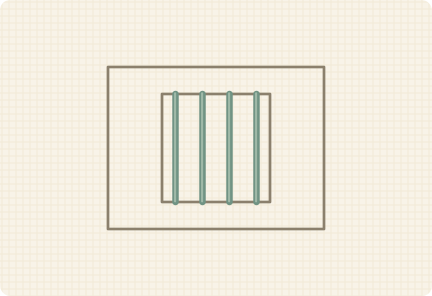
On a practice scrap mark the outline around the wear. Identify the warp on both pieces before folding the edges.
Fit a patch with the grain aligned and distribute the join around all four corners.
Work the steps ↓ Browse 4 techniques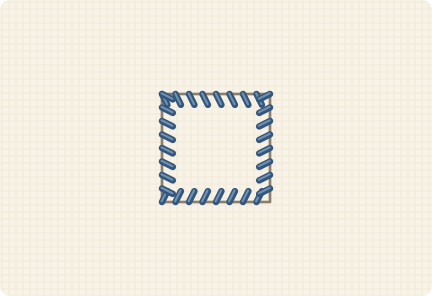
On a practice scrap mark the outline around the wear. Identify the warp on both pieces before folding the edges.
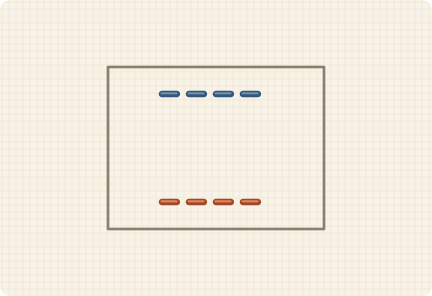
Center the patch beneath the opening. Baste opposing sides in turn so the grain and any check pattern stay aligned.
Fell the folded edges with small catches. Ease each corner into position before securing the second side.
A bulky fold or excess tension. Reopen the last few stitches and spread the allowance at the turn.
If the garment be no longer new, it should be patched with a slighter material than that of which it was originally made. The patch should be of the same shape, and cut the same way of the fabric, as the piece it is to replace, it should also be, just so much larger, as to allow for the turnings in, and can either be top-sewn, or else, run and felled in.
Tack in the new piece, so that its edges over-lap the edges of the hole. Make a little snip at the corners with your scissors to prevent puckering. The back-stitching should form a right angle at each corner.
To do this, the edges of the hole and of the patch, must first be turned in, and either overcast or hemmed, to prevent their fraying, after which, sew the two edges together. The raw edges may also be turned in with herring-boning, putting the needle, only through one layer of stuff.
Take a square piece of the original stuff, 5 or 6 cm larger each way, than the hole it is to fill, draw out threads on all the four sides, till the piece exactly matches the hole, and tack it into its place. Into this loop, slip the first of the threads, which as it were, form a fringe to the patch, and tighten the loop round it, and so on with each thread, alternately taking up and leaving threads in the fabric, as in ordinary darning.


