Needlepoint
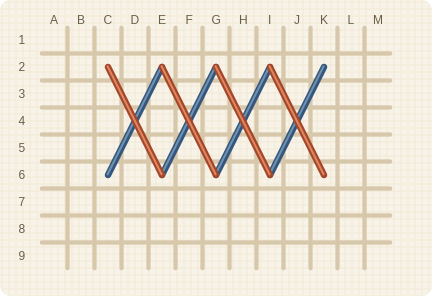
Broad cross stitch
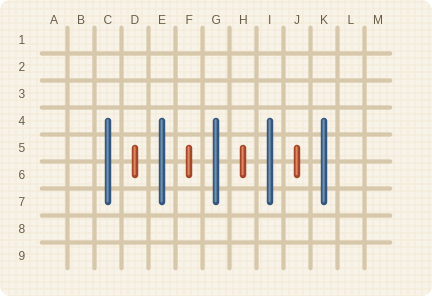
Use an elongated cross to make a tall counted unit with a clear center.
Form a Scotch-style diagonal block, then compare the effect of touching and separated blocks.
Fit short and long diagonal stitches into a small rectangular unit.
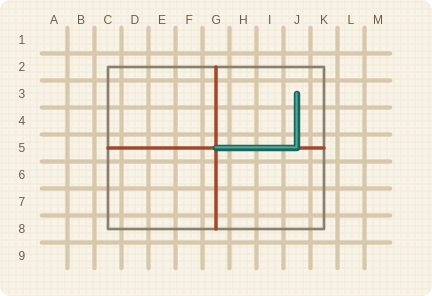
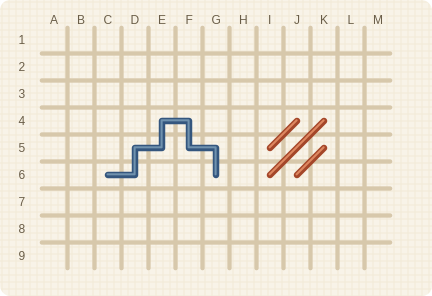
Give a chart and a blank canvas the same starting point. Two removable guides let you count out to a roofline or the center of a face.
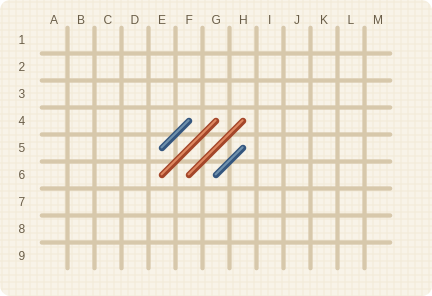
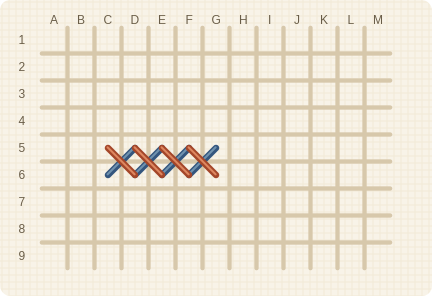
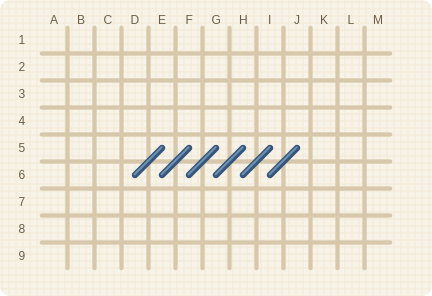
Build a row of small crosses in two passes. The direction of the top leg determines how the whole row catches the light.
Fit a repeat, a corner and an inner motif into one original canvas sampler.
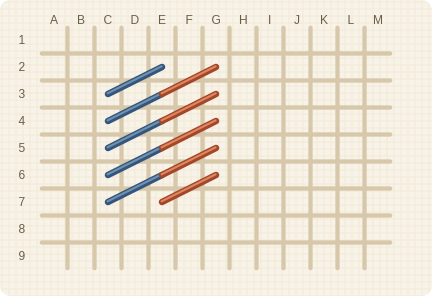
Hold laid diagonal strands with small crossing stitches. Changing the lean of the catches gives neighboring bands a twill-like surface.
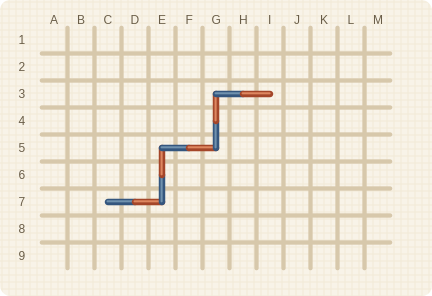
Work an outline in two journeys so the return fills the spaces left by the outward pass.
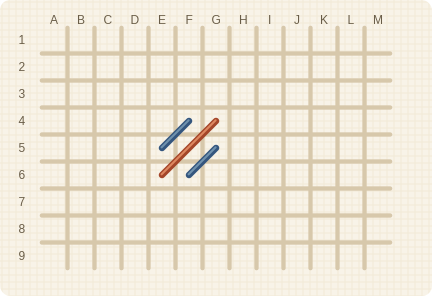
Anchor the end of each three-by-three diagonal with a small crossing stitch. This sample shows two units, one facing each way.
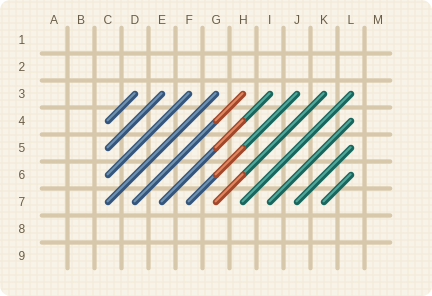
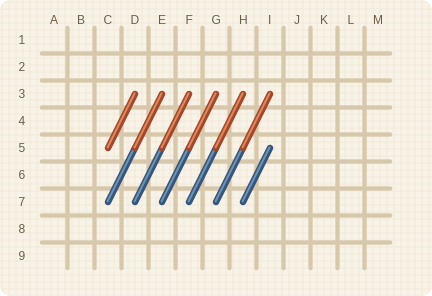
Alternate short and longer diagonals along a sloping row. In this exercise a chart interval represents one pair on double-thread canvas.
Work the first leg of a cross across one mesh intersection. Moving from left to right keeps the travel on the back short and vertical.
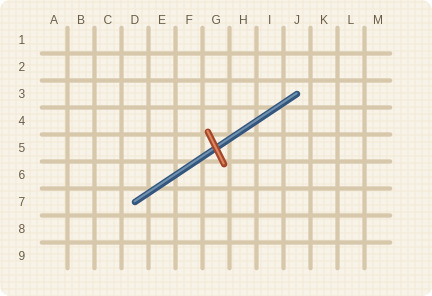
Use a long foundation stitch and a shorter crossing stitch to change texture and control long floats.
Build a small square with a long central diagonal and a short diagonal on either side.
Build a triangle from four diagonals of increasing depth. The four spans are one, two, three and four units. Count one pair as one unit on double-thread canvas.
Alternate long and short upright stitches for an open ground that lets the base fabric show.
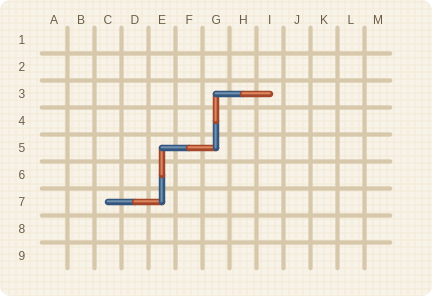
Plan an outward and return path so the line reads cleanly on both faces of linen.
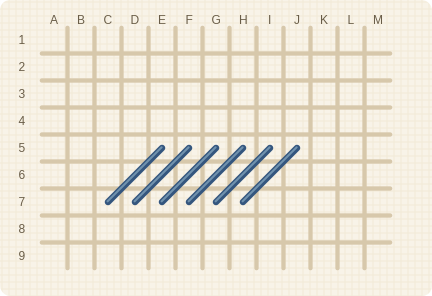
Count canvas threads between holes and compare one-by-one, one-by-two and two-by-two diagonals.
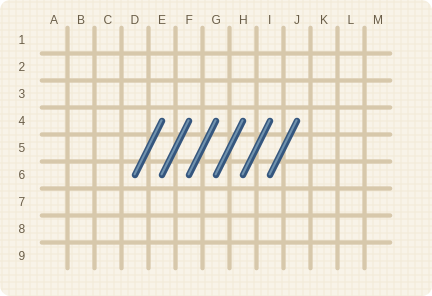
Give a sample a ribbed appearance with shallow diagonals built in vertical lines.
Build a textured square from a single cross. Four shorter stitches catch its corners, leaving a little diamond of color on the surface.
Make a square of long and short diagonals with the count one, three, five, three, one. This counted variation leaves room for a dividing band.
A taller diagonal makes a narrow, continuous band. Count its height and width separately to keep the angle steady.
Layer an upright cross over a diagonal one to make an eight-rayed star.
Use a small diagonal stitch to describe an eye, a thin edge or a change of color on counted canvas.
Let adjacent diagonal stitches overlap to make a close-set fill across a band.