
Material
Thread organizers and labels
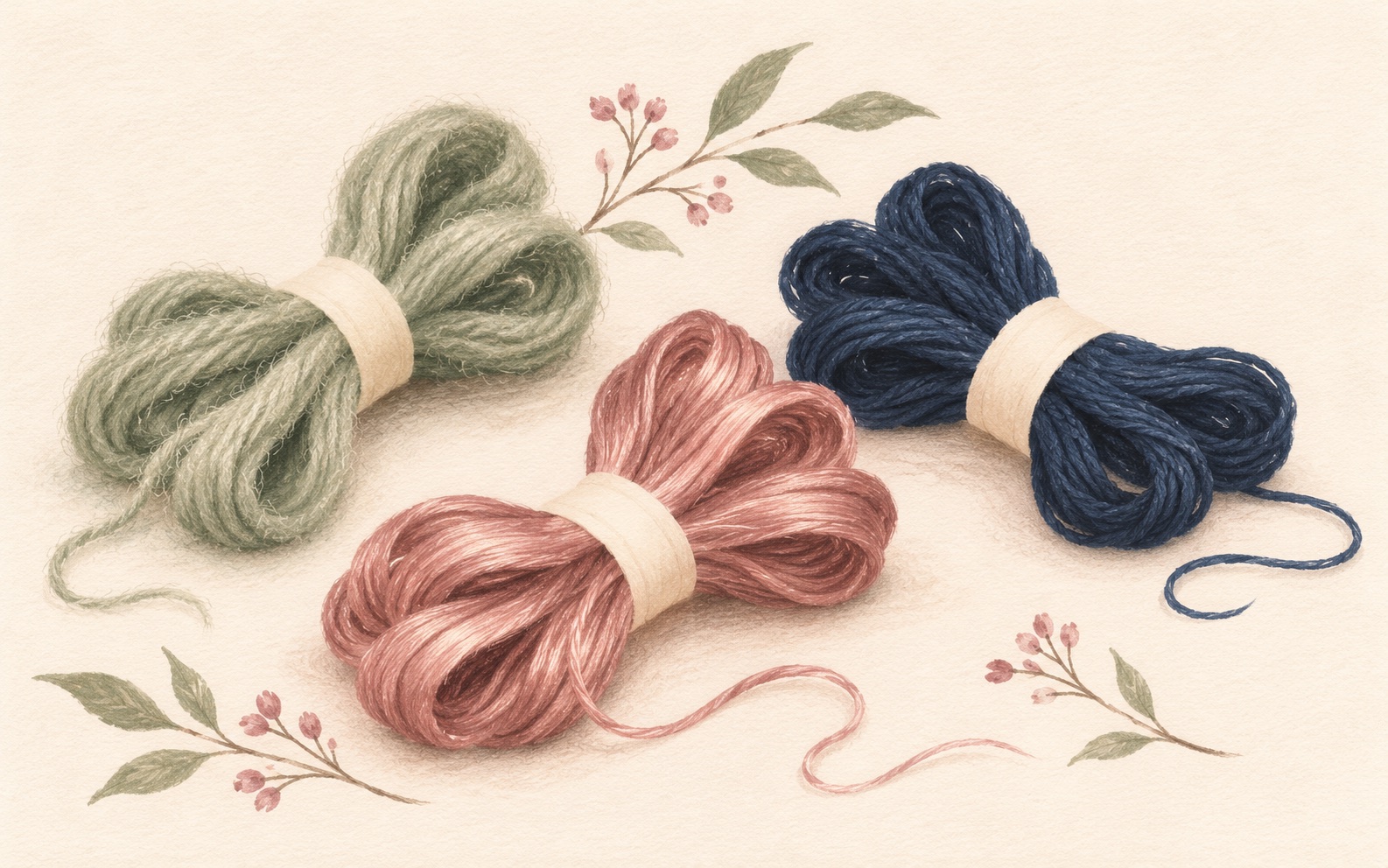
Keep manufacturer, product line, color, dye lot, and strand preparation with needlepoint thread using bags, cards, and project labels.
Label thread before removing it from its original packaging. The minimum useful identity is maker, product line, color number or name, and dye lot when supplied. For prepared working lengths, add the strand count or other preparation.
A slot marked “blue” helps you find a color today but does not help you reorder it or distinguish two similar materials next month. The organizer should preserve information, not only separate colors.
Match the organizer to the thread
Bags keep labels and loosely coiled lengths together. Cards or bobbins can make small quantities easy to sort, but wind gently rather than pulling the thread into tight creases. Hooks or hanging organizers can keep working lengths accessible when the setup protects them from tangling.
Choose the method that suits the product’s construction and your available space. A delicate filament, a bulky wool, and separated floss do not need to be stored in exactly the same way.
The Caron thread descriptions show why a line name matters: different constructions can sit within one manufacturer’s range.
Create one complete label
Use a label such as “maker / line / color / lot / project area.” For a prepared bundle, add “five separated strands” or “one whole thread,” as appropriate. If a value is unknown, mark it unknown rather than assigning a likely match.
Keep a photograph of the original label as a backup, but attach the written identity to the physical thread as well. A folder of photographs is difficult to use when several unmarked blue lengths are already mixed together.
The Kreinik inventory form separates family and color identifiers; copy that organizational principle without reducing everything to a single number.
Separate three kinds of material
Keep unused full skeins, clean usable leftovers, and short waste ends distinct. Do not return a partly worn working length to the unused supply without identifying it. A later session should not begin with a frayed length mistaken for new thread.
Retain enough original label material to identify every split group. If you divide one skein between two projects, create a duplicate label at the time of division.
Close out the project clearly
When stitching is complete, keep useful leftovers with the project record or in a labeled storage system. Note where each color was used and whether the quantity is a full skein, a partial skein, or only short lengths.
The stitch journal records the design decisions; the dye-lot guide explains the batch information worth preserving. A small amount of labeling now is often what makes a later repair possible without buying several near-matches and hoping one is correct.
Keep learning
Material
Wool thread for needlepoint
Compare Appletons crewel and tapestry wool, understand their different weights, and choose a 13 or 18 mesh starting setup without assuming interchangeability.
Material
Silk thread for needlepoint
Compare Splendor and Soie d’Alger, prepare a strandable silk, and use the maker’s 18 mesh guidance without transferring it to every silk.
Learning path
Your first needlepoint canvas: a learning path
Follow a linked beginner path from choosing a canvas and planning its finish to starting threads, stitching, and checking your first project.