
Material
Beads and embellishments on canvas
Check bead spacing, needle passage, attachment thread, support, and finishing clearance before adding embellishments to canvas.
Beginner13 mesh18 mesh
The StitchArt learning library
Find a starting point, explore stitches and materials, and work through the details that make a project your own.
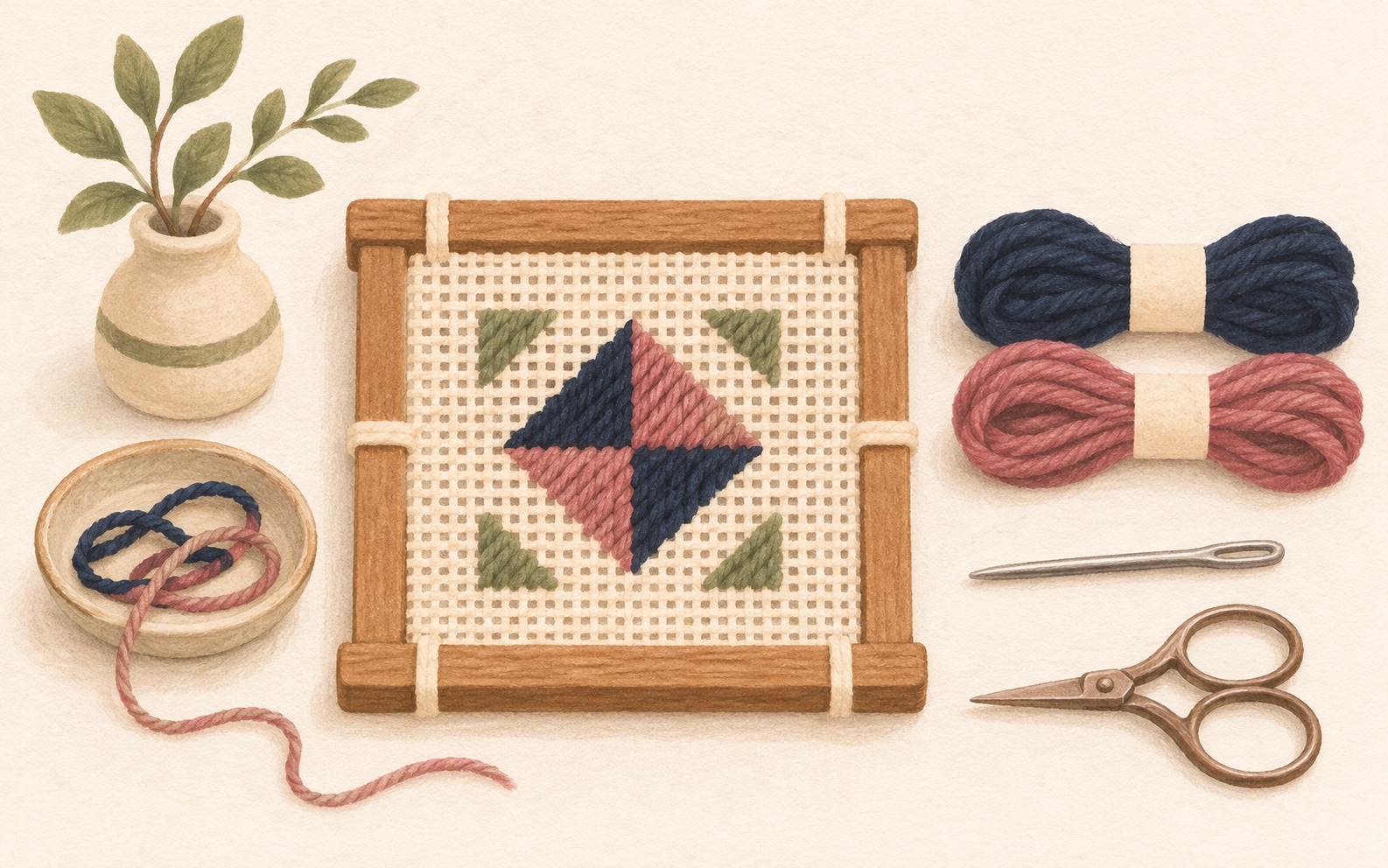
25 articles
Material
Check bead spacing, needle passage, attachment thread, support, and finishing clearance before adding embellishments to canvas.
Material
Record canvas, thread, needle, stitch, preparation, observations, and limitations on a useful materials test card with a worked planning example.
Material
Understand why canvas feels stiff, how support affects handling, and why washing or softening a painted canvas is not a routine preparation step.
Material
Select a tapestry needle by checking the point, eye, thread passage, and canvas response rather than relying on mesh count alone.
Material
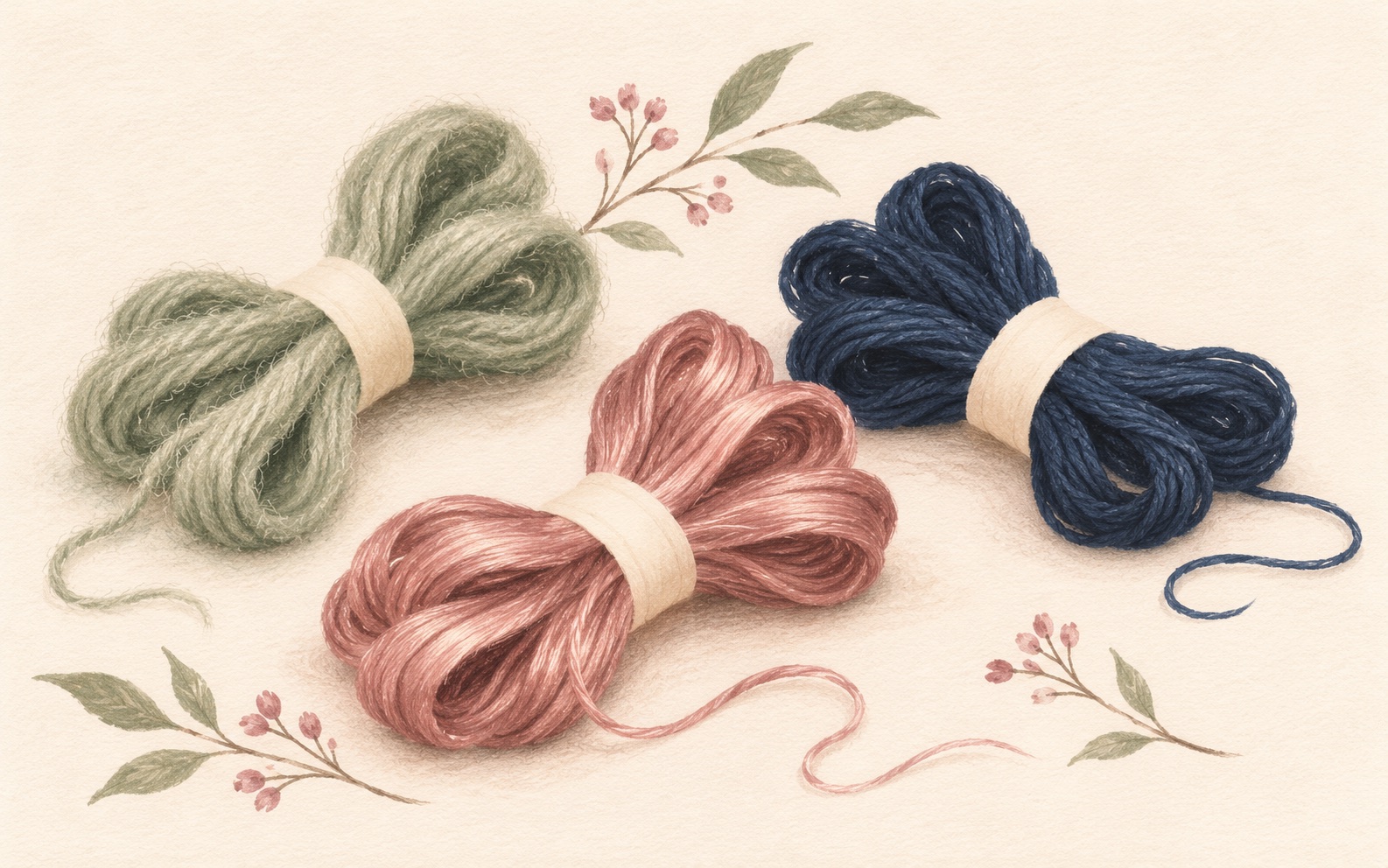
Compare DMC six-strand floss, pearl cotton, and Soft Cotton, with preparation differences and concrete 13/18 mesh starting choices.
Material
Compare interlock canvas with plain mono, understand its locked intersections, and check whether it matches your design and stitch instructions.
Material
Learn when a laying tool helps, how to guide a strand bundle, and how to avoid dragging, piercing, or over-tightening the stitch.
Material
Evaluate task lights and magnifiers using your actual canvas, working distance, glare, field of view, stability, and color comparisons.
Material
Compare fine blending filament with metallic braid, choose the role of the sparkle, and prepare a manageable needlepoint test area.
Material
Understand mono canvas construction, compare13 and18mesh, and check grid alignment, color, support, and finishing needs before stitching.
Material
Keep track of needlepoint needles during stitching, transport, and project changes with a simple count-and-store routine.
Material
Understand tapestry needle numbering, distinguish needle families, and choose an eye and shaft that suit your thread and canvas.
Material
Understand how stitch order, working lengths, and repeat placement affect color in variegated and overdyed needlepoint threads.
Material
Learn how Penelope canvas differs from mono and interlock, what paired counts mean, and what to confirm before choosing a stitch or chart.
Material
Choose scissors for thread, canvas, paper, and finishing materials, and learn how to trim safely without cutting the ground.
Material
Compare scroll frames, bars, and other supports by canvas size, working window, tension, reverse access, portability, and raised stitching.
Material
Compare Splendor and Soie d’Alger, prepare a strandable silk, and use the maker’s 18 mesh guidance without transferring it to every silk.
Material
Learn which threads are intended to separate, how to prepare a strand bundle, and why ply count alone does not mean a thread is divisible.
Material
Measure cut canvas, design area, margins, and frame clearance so your stretcher bars fit the project without trapping stitches under the wood.
Material
Learn why color numbers are not universal and compare replacement threads by hue, value, sheen, construction, and stitched appearance.
Material
Understand when dye-lot differences are visible, how to label skeins, and what to do when a project needs thread from a different batch.
Material
Keep manufacturer, product line, color, dye lot, and strand preparation with needlepoint thread using bags, cards, and project labels.
Material
See how ground color affects open stitches, pale threads, painted boundaries, and the visual balance of a needlepoint design.
Material
Compare wool–silk blends with pure-fiber threads using construction, preparation, sheen, coverage, and the needs of a specific design area.
Start with the foundations, build a small vocabulary of stitches, learn to shape them at the edges, and plan your finishing from the beginning.