
Step 1 of 3
Lay a cross
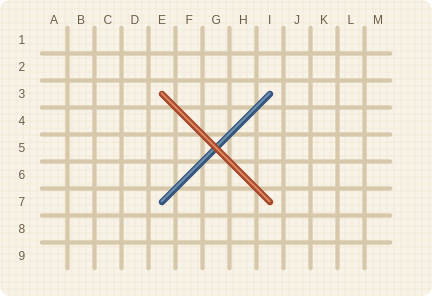
Mark a four-by-four square and work its two corner-to-corner diagonals. Keep the crossing in the center.
Use a long foundation stitch and a shorter crossing stitch to change texture and control long floats.
Work the steps ↓ Browse 16 techniques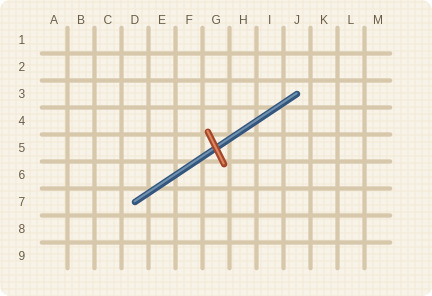
Mark a four-by-four square and work its two corner-to-corner diagonals. Keep the crossing in the center.
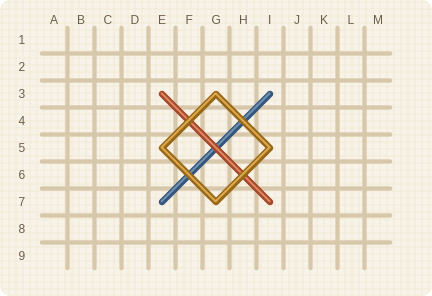
With the second color, stitch from the left midpoint to the top midpoint, crossing one arm. Work around the remaining three arms.
On a separate square couch a long diagonal at its midpoint. Compare the held diagonal with the four little corner crossings.
Its endpoints are too slack or its span needs an additional catch. Test one crossing before tightening every stitch.
Work a simple cross at alternate positions. Fill the spaces with elongated crosses over two threads in one direction and six in the other. In the next row place a short cross opposite a long one.
Build a textured square from a single cross. Four shorter stitches catch its corners, leaving a little diamond of color on the surface.
Work alternating diagonal and upright foundations, then return to cross them. In the next pair of rows reverse the orientation so that each set leans against its neighbor. Test the return journey in another color.
Work the first pass left to right, crossing two horizontal threads and returning beneath four vertical threads. Check the interlacing on a short row before making the next row from the same starting side.
Mark a four-thread square for the repeat. Work each row separately. Bring the working thread under the two middle threads, then under the upper pair to build an overlapping line.
Carry a diagonal over two double threads in each direction. Return beneath one double thread toward the starting row. Fill the channels between the long rows with a second color of backstitch.
Count three vertical and three horizontal threads for the long diagonal. Secure its last intersection with a small backstitch. Mirror the lean of that catch when changing the direction of the long stitches.
Lay diagonal threads across the intended area. Secure them in rows with overcasting stitches. Reverse the direction of the securing stitches in the next rows and look for the twill-like change in the surface.
Fit short and long diagonal stitches into a small rectangular unit.
Work a sloping row on double-thread canvas. Carry the diagonal over one pair, then over two pairs. Mark the first short stitch in each repeat before extending the line.
Build a small square with a long central diagonal and a short diagonal on either side.
For the opening row count two threads across and six high. Bring the needle back four threads lower and catch the middle of the preceding stitch. Work the next row over four threads, overlapping the previous row by two.
Layer an upright cross over a diagonal one to make an eight-rayed star.
Lay a foundation over four single or two double threads. Work a shorter crossing to its left, then mirror the crossing to the right. Place the next unit diagonally and keep both sides of the unit the same width.
Alternate long and short upright stitches for an open ground that lets the base fabric show.
After the first slanted leg, return under its vertical threads and extend the next leg four threads beyond the first. Choose whether the short or long stitches meet between rows and repeat that decision throughout.

