
Guide
Choosing a first needlepoint project
Choose a first needlepoint project by comparing design complexity, mesh, included supplies, finishing needs, and a practical buying checklist.
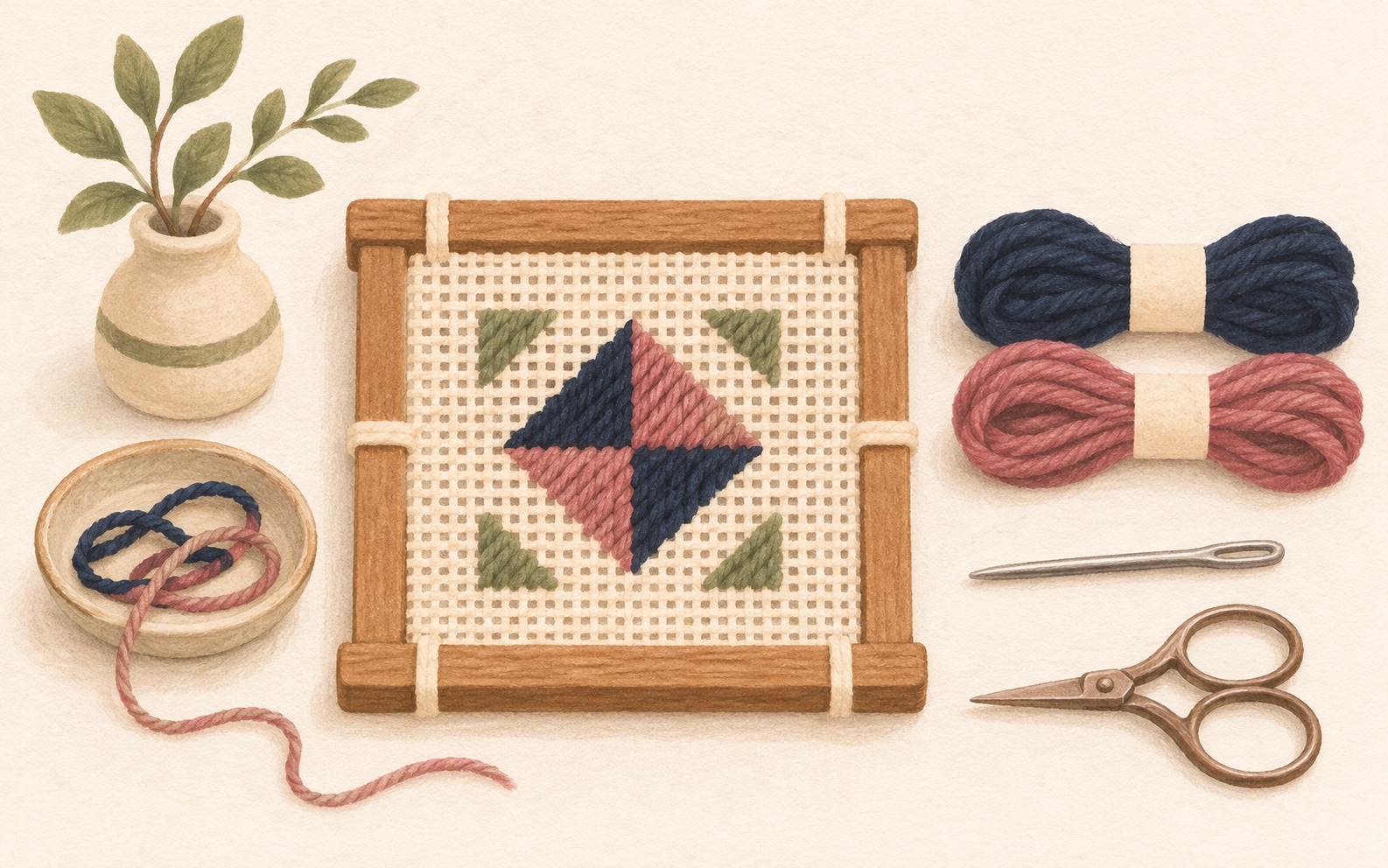
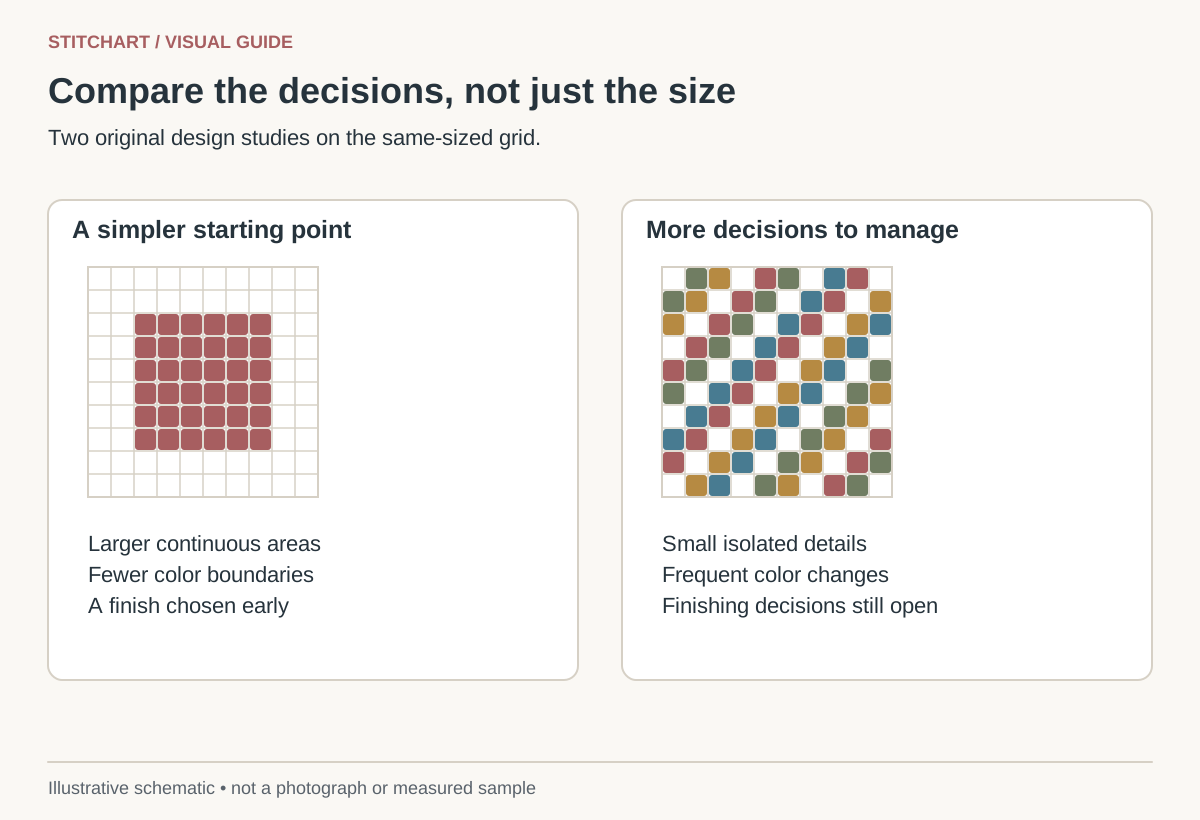
A small canvas is not automatically an easy canvas. A tiny portrait with many isolated colors can require more decisions than a larger geometric design with broad areas. Choose a project whose design, supplies, and finish you can understand before you buy.
Compare the work, not just the inches
| Feature | Usually simpler to manage | Adds decisions |
|---|---|---|
| Color areas | Several connected blocks of color | Many isolated one-stitch color changes |
| Edges | Clear, broad shapes | Tiny lettering, faces, and ambiguous painted boundaries |
| Stitch plan | One named tent-stitch method | Several unfamiliar decorative repeats |
| Supplies | Labeled thread and a specific guide | Unlabeled leftovers or substitutions |
| Finish | Known dimensions and requirements | An undecided object or special hardware |
These are selection clues, not a rule that beginners cannot enjoy detail. The important question is whether the extra decisions are ones you want to learn now. See the design at actual stitched size; a screen enlarged to show every intersection can hide how small the work will be in your hands.
A worked comparison
Imagine two 4-inch-square canvases. One has four large geometric regions and a simple border; the other has a pet face, individual whiskers, a collar inscription, and a patterned background. Their dimensions match, but the second asks for more color changes, more interpretation of narrow features, and more stops and starts. For learning a repeatable tent stitch, the geometric design gives more uninterrupted practice.
Now compare a 2-inch ornament with a 6-inch design containing only three large shapes. The ornament has less area, but a complicated outline and tiny letters may still make it less straightforward. A larger clear design can be easier to follow while taking longer to fill. This is a hypothetical comparison; inspect the actual canvas and guide you are considering.
Choose mesh for detail and comfort
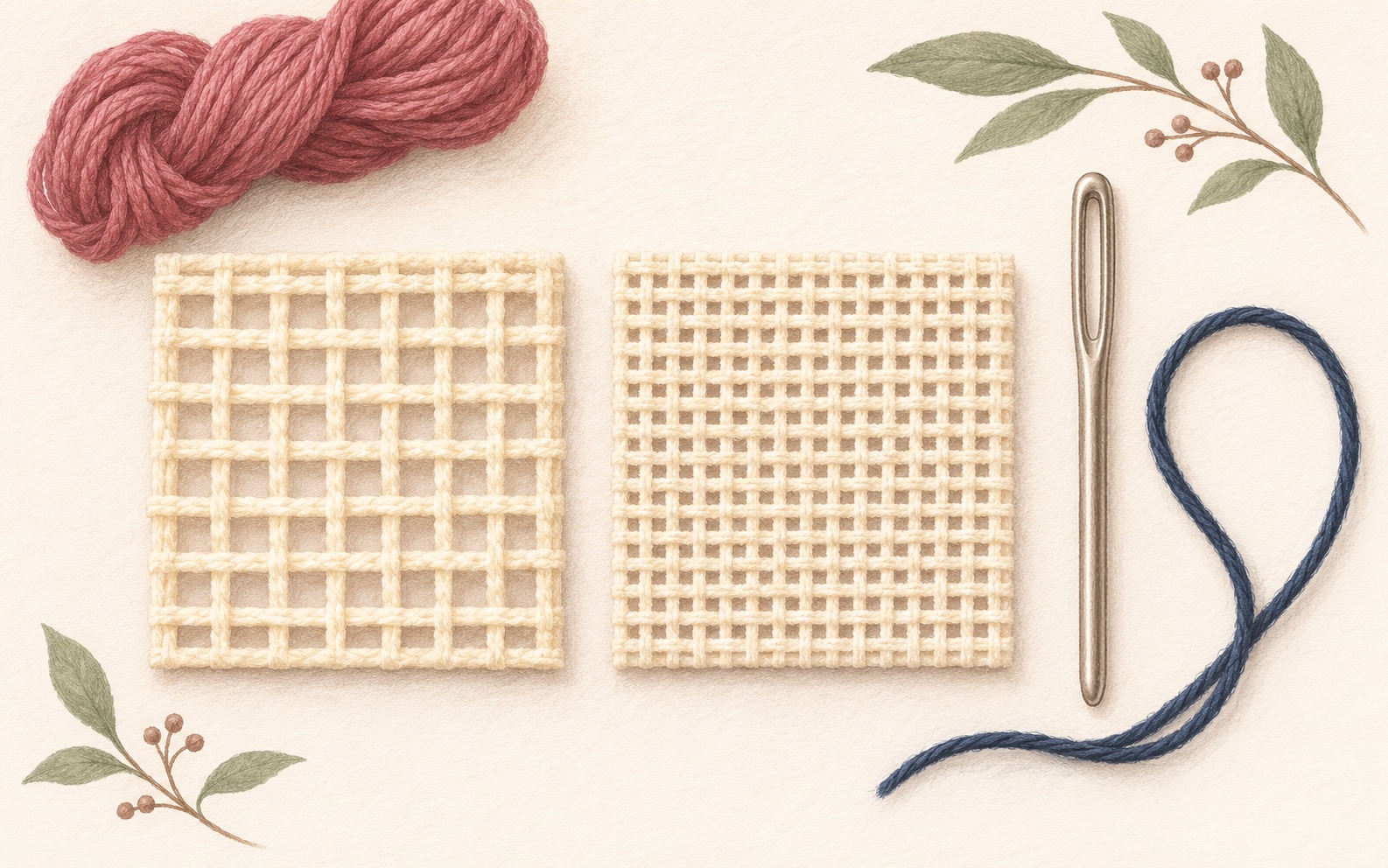
Read the 13/18 mesh comparison with your proposed design in mind. At the same width, 18 mesh offers more positions for detail; 13 mesh has a larger grid. Neither choice establishes which thread will cover the canvas. Use the kit’s preparation or a named, checked alternative.
If possible, try a few stitches with the actual canvas and thread before committing to a large project. You are checking visibility, comfortable needle passage, and whether the result is the surface you want. You do not need to invent a whole experimental program to choose a first kit.
Fill this checklist before purchasing
- Stitched dimensions: ___; full canvas dimensions: ___; mesh: ___.
- Canvas only, thread kit, or complete kit: ___. Missing supplies: ___.
- Stitch method and instructions included: ___. Help available from: ___.
- Thread maker, line, colors, and preparation identified: yes/no.
- Intended finish: ___. Required margins and extra edge rows confirmed: ___.
- Budget includes canvas, thread, tools, finishing, and any shipping: ___.
Ask about the finish before cutting or stitching. A frame opening, ornament shape, and pillow construction each have different requirements. Working with a finisher gives the questions to ask, while project budgeting separates the costs.
Make the final choice
Choose the design you are interested in and can explain. You should be able to say what you will stitch, what materials you will use, and what the finished object will be. If the only missing skill is basic tent stitch, start with the linked beginner path. If the design depends on several unfamiliar techniques and no guidance is supplied, plan a practice project first or arrange instruction before purchasing.
Keep learning

Learning path
Your first needlepoint canvas: a learning path
Follow a linked beginner path from choosing a canvas and planning its finish to starting threads, stitching, and checking your first project.
Guide
13 versus 18 mesh: choosing the right scale
Calculate how 13 and 18 mesh change a design’s size and detail, compare fixed-size and fixed-count examples, and choose a practical setup.