
Guide
Choosing stitches for brickwork
Plan needlepoint brickwork with aligned courses, readable mortar, and a counted wall example. Learn when tent stitch is clearer than a decorative repeat.
Brickwork needs orderly courses and believable proportions. The first decision is whether the canvas shows individual bricks or merely suggests a brick-colored wall. A small house may not have enough intersections to reproduce every mortar joint.
The name “brick stitch” can be misleading here. RSN brick stitch is an offset arrangement of upright stitches. It creates a rhythmic surface; it is not a promise that each stitch will resemble a horizontal architectural brick.
Count a course before filling the wall
Find the width of one painted brick and the height of one course. Then count the wall’s narrowest usable space between a window and a corner. That strip, not the largest open area, determines whether a repeat is practical.
If the wall has one-intersection mortar lines separating small red blocks, tent stitch gives you direct control of those color positions. A large decorative stitch may cross the mortar and blur the building’s structure. Use the repeat-size guide before choosing the fill.
A wall twenty-four positions wide
Consider an imaginary wall with six brick units across it, each allocated four positions including its share of the joint. Twenty-four divides evenly by four, but the next course’s stagger still needs planning. Draw both courses on squared paper. Mark the two half-units that appear at the side edges of the staggered course.
Now place the window opening on that same grid. Continue the imagined brick courses behind the window rather than restarting the pattern at each side. This prevents the right-hand wall from drifting half a brick out of alignment.
Do not treat the numbers as a universal brick pattern. They demonstrate the planning sequence: unit, offset, boundary, and opening. The actual painted design may use different proportions.
Choose the surface treatment
- Use tent stitch when small mortar joints and window edges must stay exact.
- Consider brick stitch when the wall is a broader stylized area and the offset texture supports the design.
- Consider mosaic for square paving or a tiled surface; its grouped squares should not be mistaken for elongated bricks.
- Keep decorative texture quieter on a distant building than on a large foreground wall.
At an equal physical width, 18 mesh provides more positions for individual bricks than 13 mesh. The coarser version may look better with fewer, larger implied courses. Preserve the building’s proportions instead of squeezing a detailed brick chart into insufficient space.
Check the whole façade
Stand back from the canvas. The doors, windows, and roof should remain the main structure; brick texture should support them. If every mortar joint is high contrast, the wall can become the strongest pattern in the scene.
Plan the adjacent openings with the window guide. A continuous course line that disappears behind a window and resumes in the correct place often contributes more realism than adding another red thread shade.
Keep learning
Guide
Choosing stitches for water
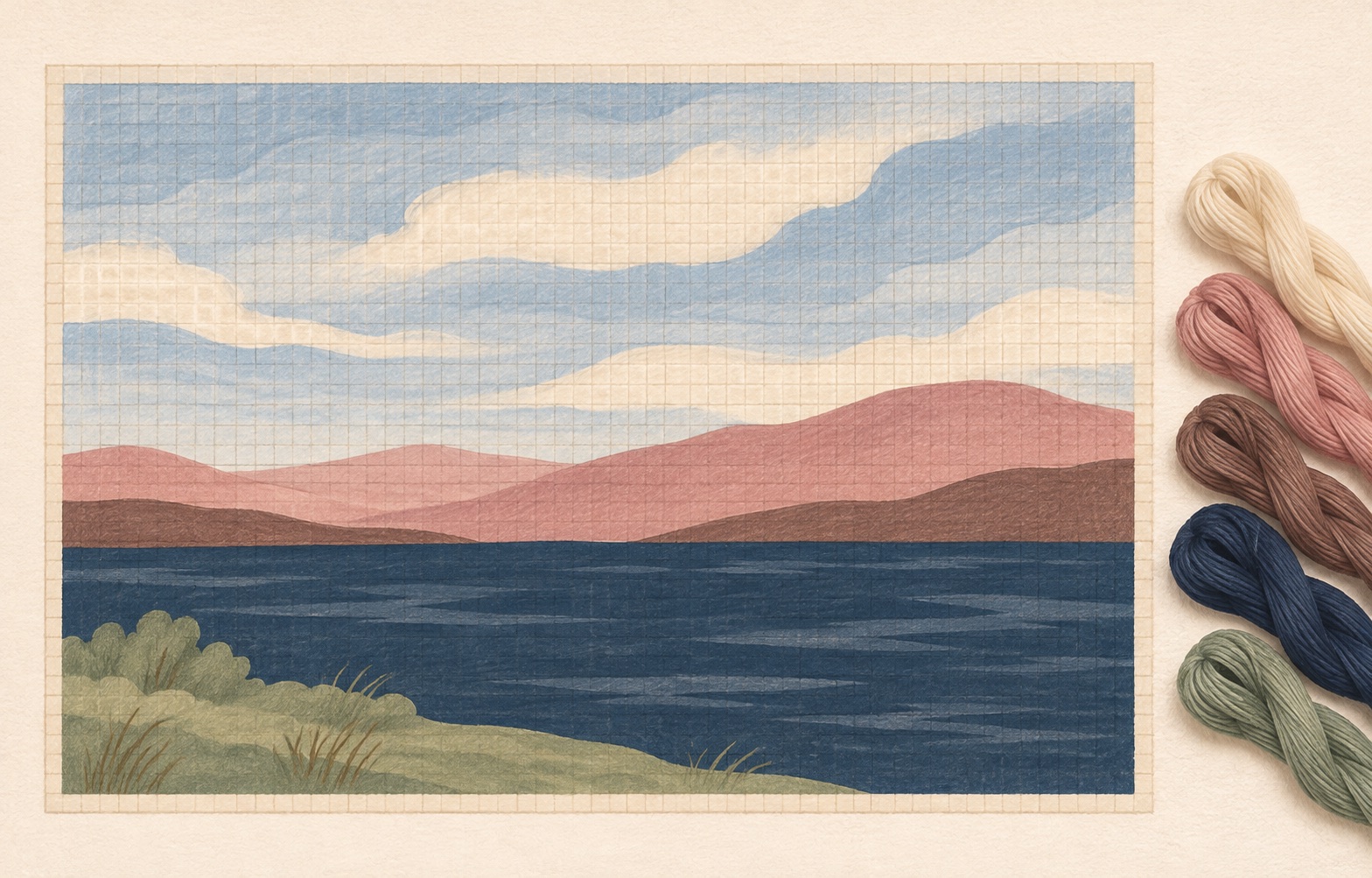
Choose between tent stitch, mosaic, and horizontal straight stitches for water, with a worked pond and shoreline example.
Guide
Choosing stitches for skies
Compare quiet tent stitch, mosaic, and an open sky treatment, then plan a roofline and cloud without breaking the design.
Learning path
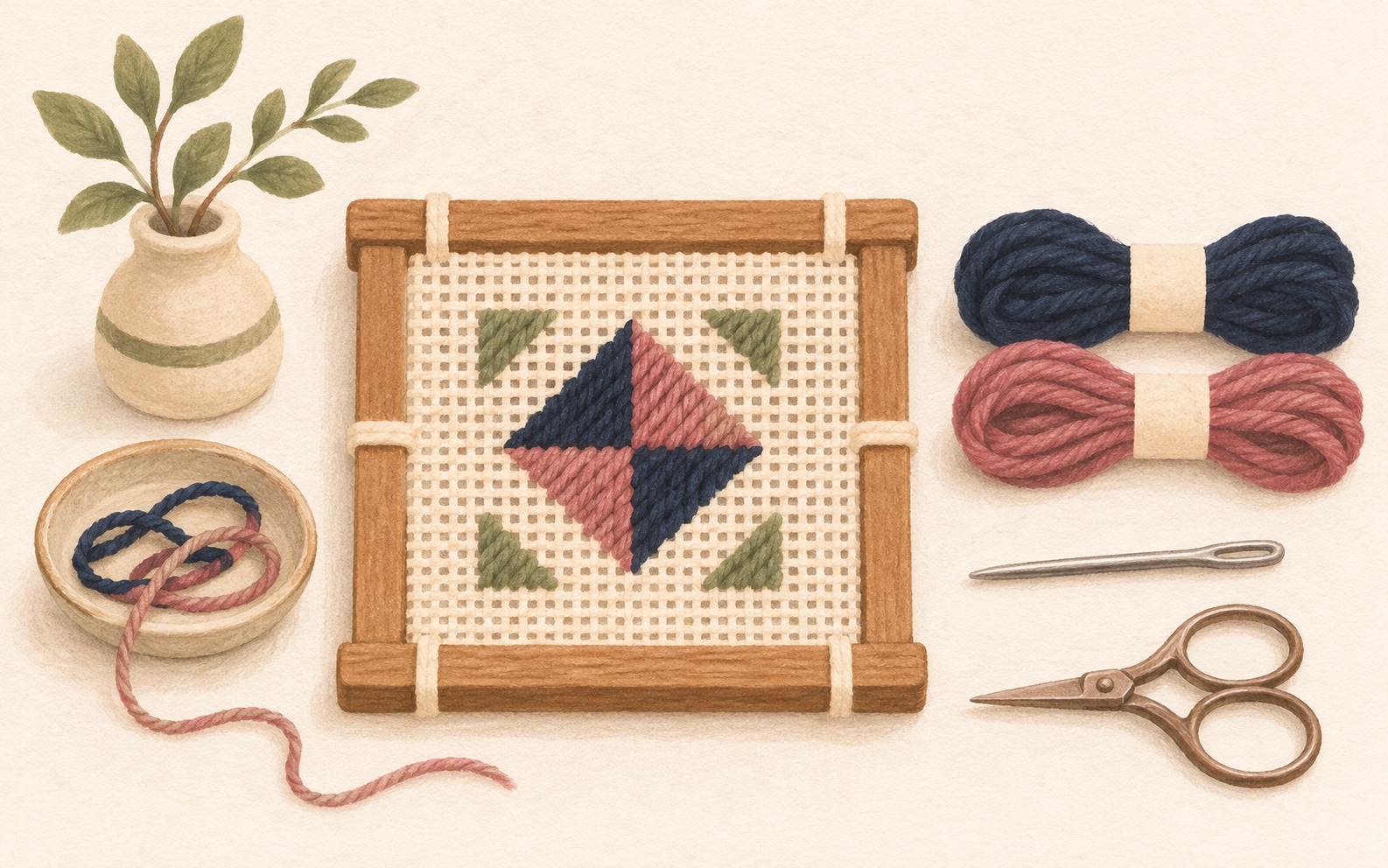
Your first needlepoint canvas: a learning path
Follow a linked beginner path from choosing a canvas and planning its finish to starting threads, stitching, and checking your first project.