
Guide
Choosing stitches for fabric and clothing
Choose needlepoint stitches for clothing with a clear plan for folds, knitted texture, smooth fabric, and small details on 13 and 18 mesh.
Clothing has two different kinds of information: the fabric’s surface and the way the garment folds around the body. A textured stitch can suggest knitwear, but color and shape still have to explain the sleeve, cuff, and fold.
Start by identifying the silhouette and the darkest folds. Keep those boundaries readable before adding a surface pattern. A decorative repeat should not run straight through a painted seam or join two garments that are meant to remain separate.
Give each garment a surface role
A smooth shirt may need only tent stitching with a few shaded folds. A chunky sweater can support more obvious grouped texture. A narrow scarf may need a simple directional treatment because there is too little room for a large repeat.
Mosaic stitch is one candidate for a small regular surface. Nobuko provides a different diagonal rhythm, while straight Gobelin has an upright character. These effects suggest possibilities; none is a literal reproduction of a woven or knitted fabric.
| Garment detail | Starting approach | Reason |
|---|---|---|
| Smooth collar or narrow cuff | Tent stitch | Keeps small edges and color changes clear |
| Broad sweater body | A restrained grouped texture | Adds a surface identity without losing the outline |
| Pleat or strong fold | A planned value change | Shows form even if the stitch stays the same |
| Small printed motif on clothing | Compact mapped color | Avoids combining an oversized stitch pattern with a tiny print |
Example: a coat and scarf
Imagine a figure wearing a navy coat and a cream scarf. Keep the coat fairly smooth, using a darker navy under the arm and a lighter navy along the lit sleeve. Give the scarf a modest directional texture so it becomes a distinct material.
Where the scarf narrows behind the neck, change to a compact treatment that preserves its shape. Do not stretch the full decorative unit across the narrow section. The eye will read the scarf through continuity of color and outline even when its smallest part cannot carry the entire texture.
A metallic accent on buttons is optional. It should not become brighter than the face if the portrait is the subject.
Match texture to space and use
At the same finished size, 13 mesh offers fewer positions for a small cuff than 18 mesh. Simplifying that cuff can be more convincing than squeezing a repeat into it. Use repeat-scale planning to check the narrowest part of the garment, not just its broadest panel.
For a pillow or frequently handled accessory, consider whether longer exposed stitches suit the object. The snag-risk guide helps evaluate that practical choice.
Finally, compare the garment with nearby hair, background, and skin. If all four areas have equally strong texture, none will read clearly. Give the clothing one main surface idea and let the folds do the rest.
Keep learning
Guide
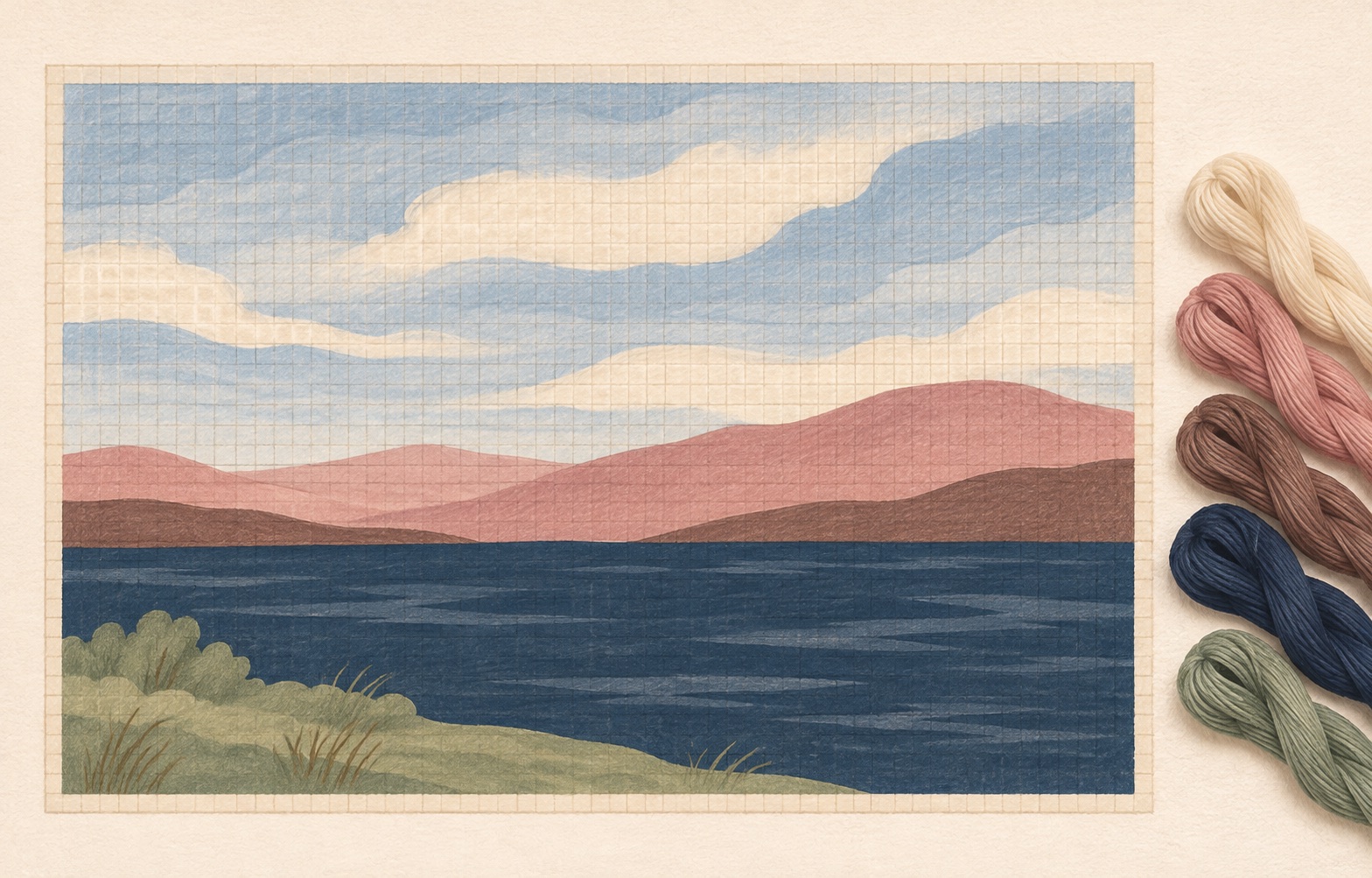
Choosing stitches for water
Choose between tent stitch, mosaic, and horizontal straight stitches for water, with a worked pond and shoreline example.
Guide
Choosing stitches for skies
Compare quiet tent stitch, mosaic, and an open sky treatment, then plan a roofline and cloud without breaking the design.
Learning path
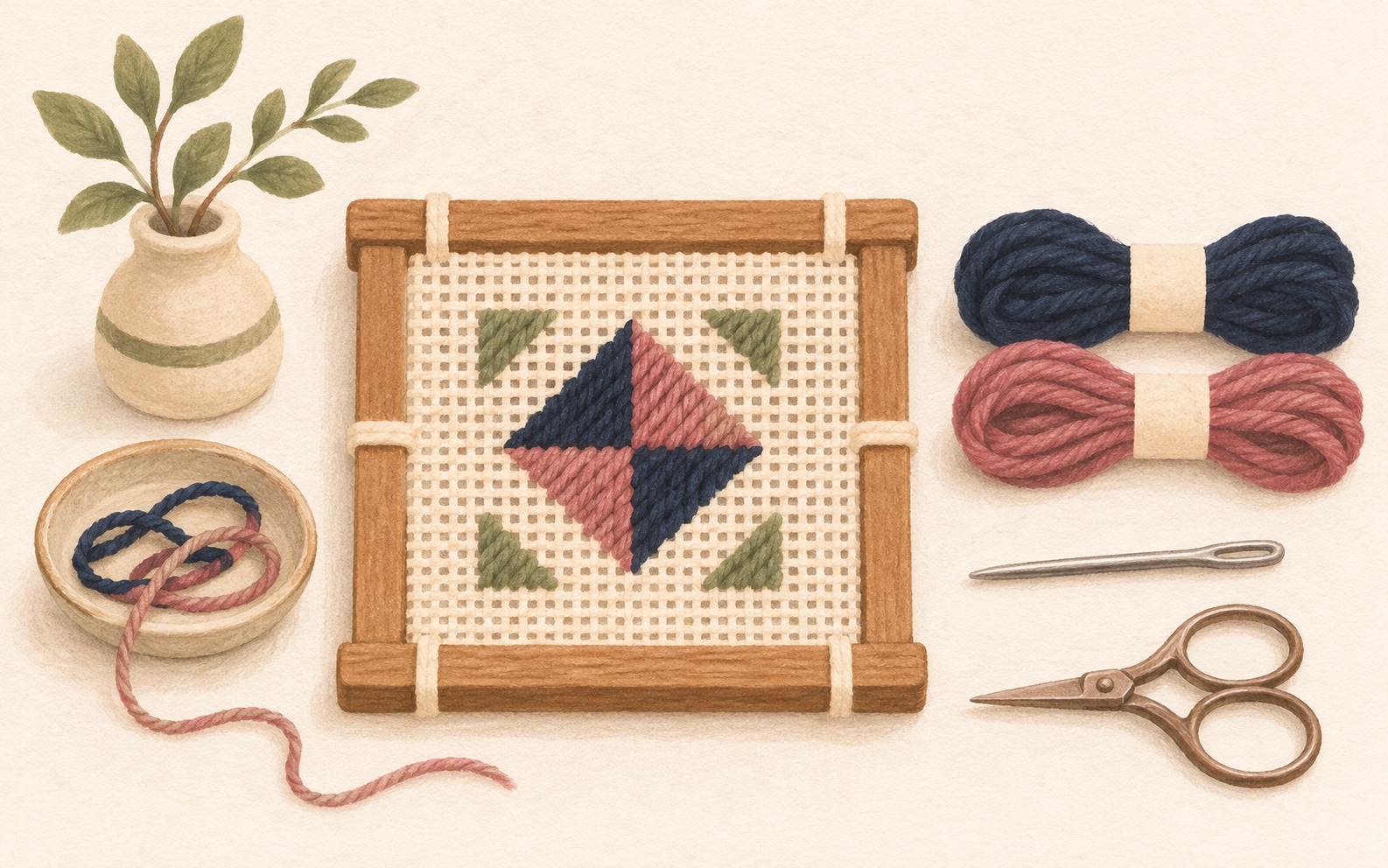
Your first needlepoint canvas: a learning path
Follow a linked beginner path from choosing a canvas and planning its finish to starting threads, stitching, and checking your first project.