
Material
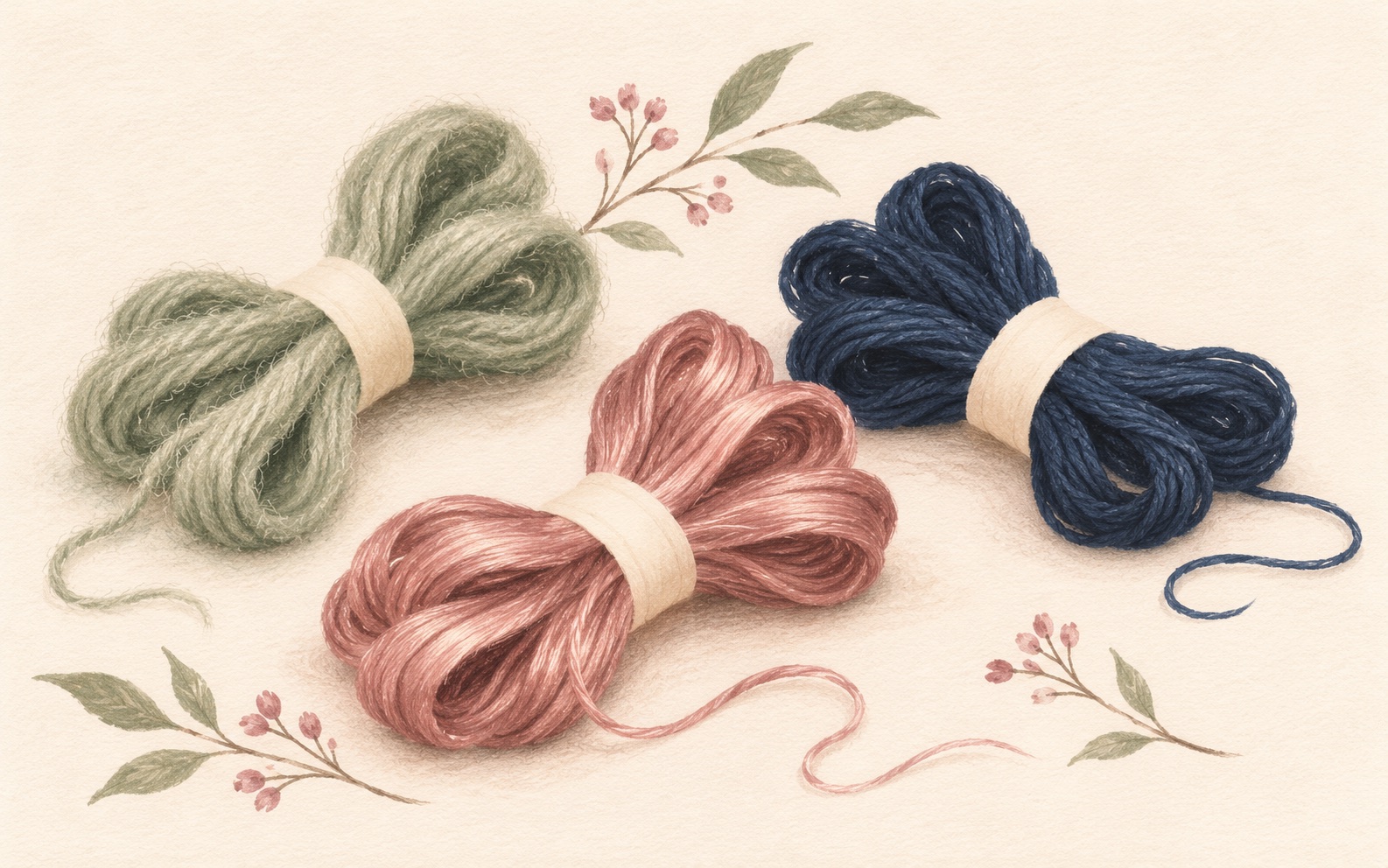
Overdyed and variegated threads
Understand how stitch order, working lengths, and repeat placement affect color in variegated and overdyed needlepoint threads.
Variegated thread changes color along its length. The order in which you consume that length determines where those colors appear on the canvas. Two stitchers can use the same skein and create different effects simply by following different routes through the design.
“Overdyed” describes a dye process, while “variegated” describes changing color. The words are often used loosely in shops. Caron distinguishes the terms and explains that its own hand-dyed color sequences are not necessarily produced by overdyeing.
Follow the color through one working length
Lay out a cut length and notice where its colors change. If you work successive stitches along one row, successive portions of that sequence appear along the row. If you complete one small motif before moving to the next, the sequence is distributed motif by motif.
A long decorative stitch uses more of the available colored length than a short stitch, and reverse travel also consumes thread. For that reason, the number of stitches before a color changes is not a fixed property of the skein.
Choose the effect deliberately
For a gradual sweep across a petal, work the petal in a route that follows its shape. For matching petals, prepare comparable lengths beginning at comparable places in the color sequence, then follow the same stitch order in each. Exact duplication may still be limited by natural variation in the thread.
The Caron variegated-thread class uses deliberate threading and placement to coordinate repeated areas. The principle is more useful than expecting a named colorway to produce a particular pattern automatically.
For a background, inspect a small field before committing. A regular route can create noticeable bands or diagonal streaks. If you want a more mixed result, change the planned distribution across small sections while preserving the actual stitch construction. Do not randomly reverse tent slants to disguise a color band.
Keep divisible components aligned
If a thread is divisible, separate it according to its instructions and decide whether matching color sections should align in the working bundle. Combining unrelated positions in the color sequence can produce a mixed effect; aligned positions can produce a clearer transition.
See thread preparation before splitting an unfamiliar product. Do not separate a non-divisible thread merely to manipulate its colors.
Record the route that gives the result you prefer, including where the working length began. Your stitch journal and dye-lot records help you repeat the decision. The aim is to place color intentionally, while allowing for the variation that makes this kind of thread useful in the first place.
Keep learning
Material
Wool thread for needlepoint
Compare Appletons crewel and tapestry wool, understand their different weights, and choose a 13 or 18 mesh starting setup without assuming interchangeability.
Material
Silk thread for needlepoint
Compare Splendor and Soie d’Alger, prepare a strandable silk, and use the maker’s 18 mesh guidance without transferring it to every silk.
Learning path
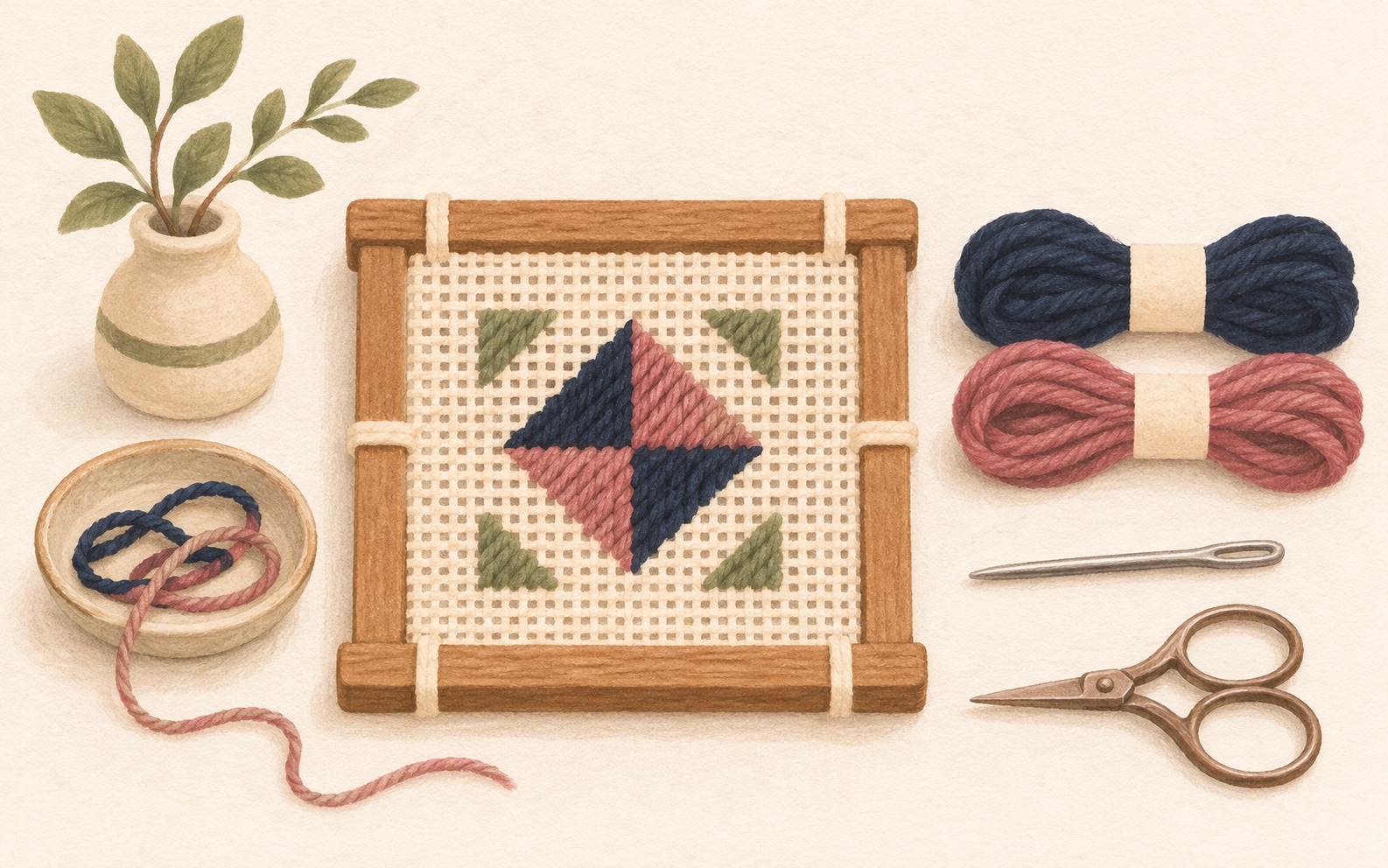
Your first needlepoint canvas: a learning path
Follow a linked beginner path from choosing a canvas and planning its finish to starting threads, stitching, and checking your first project.