
Material
White, colored, and painted canvas backgrounds
See how ground color affects open stitches, pale threads, painted boundaries, and the visual balance of a needlepoint design.
Canvas color becomes part of the finished design whenever the stitching leaves ground visible. White, a quiet colored ground, and a painted image can produce different impressions under the same open stitch. Decide whether you want the ground to disappear or contribute to the surface.
The Zweigart/Fleur de Paris range includes several ground colors. Those choices are not merely cosmetic packaging: an exposed grid sits directly beside the working thread in the viewer’s field of vision.
Consider the coverage first
In a dense covered area, canvas color may be less prominent, though small gaps and edges can still reveal it. In an open stitch, the visible ground is intentional. A contrasting ground can emphasize the grid; a closer color can make the opening less conspicuous.
For a pale thread over a dark ground, inspect the effect at normal viewing distance. Do not automatically add more strands if the stitch is meant to be open. First decide whether the contrast fits the design.
Unexpected show-through helps distinguish a coverage problem from deliberate openness.
Read painted boundaries carefully
On a painted canvas, open stitches may reveal the painting as well as the grid. That can be an intentional effect, but it can also expose an ambiguous boundary that a covered stitch would conceal.
Try the proposed stitch across a representative color transition before using it throughout a large area. Check whether the visible paint supports the stitched shape or creates a second competing outline.
For a small facial feature or letter, a quieter covered stitch may preserve clarity better than an open decorative field. The choice is about the scale and importance of that detail, not a rule against openwork.
Compare in the actual color setting
Lay the working thread beside the intended ground and neighboring colors. Then inspect a small complete stitch area. A loose skein does not show how much ground will remain visible between repeated stitches.
The EGA colorwashing example illustrates deliberate coordination of canvas and thread. It is a specific technique, not a reason to repaint an existing canvas without checking compatibility, ownership of the design, and the needs of later finishing.
Keep the preparation reversible
When choosing a new blank ground, compare available colors before stitching. When working a purchased painted canvas, consider a different thread or stitch before attempting to change the surface itself.
Use a focused practice swatch to test the visual relationship and the sizing guide before considering any treatment. A successful background supports the subject and the intended texture. It need not hide every trace of canvas when the design deliberately uses the ground as one of its materials.
Keep learning
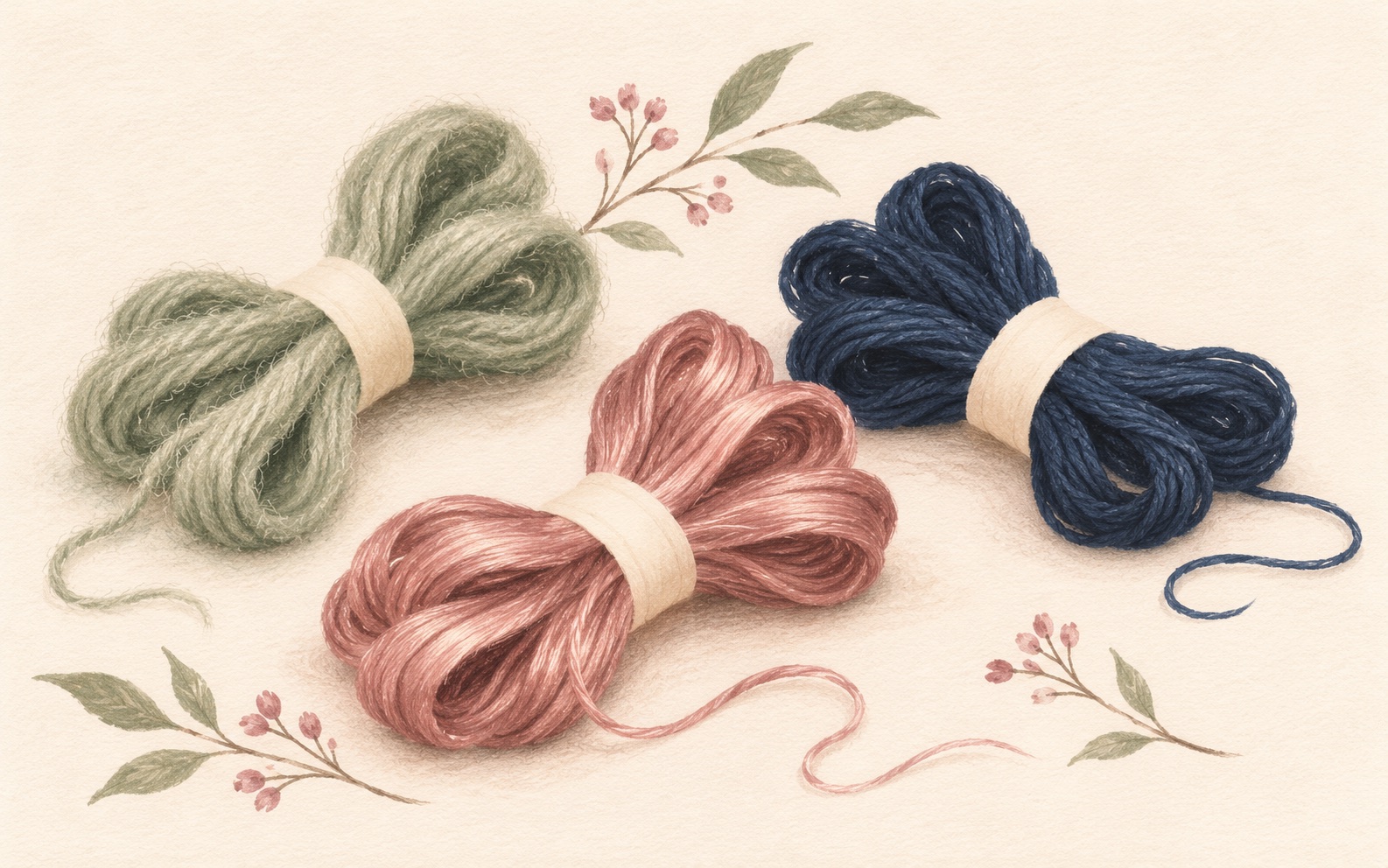
Material
Wool thread for needlepoint
Compare Appletons crewel and tapestry wool, understand their different weights, and choose a 13 or 18 mesh starting setup without assuming interchangeability.
Material
Silk thread for needlepoint
Compare Splendor and Soie d’Alger, prepare a strandable silk, and use the maker’s 18 mesh guidance without transferring it to every silk.
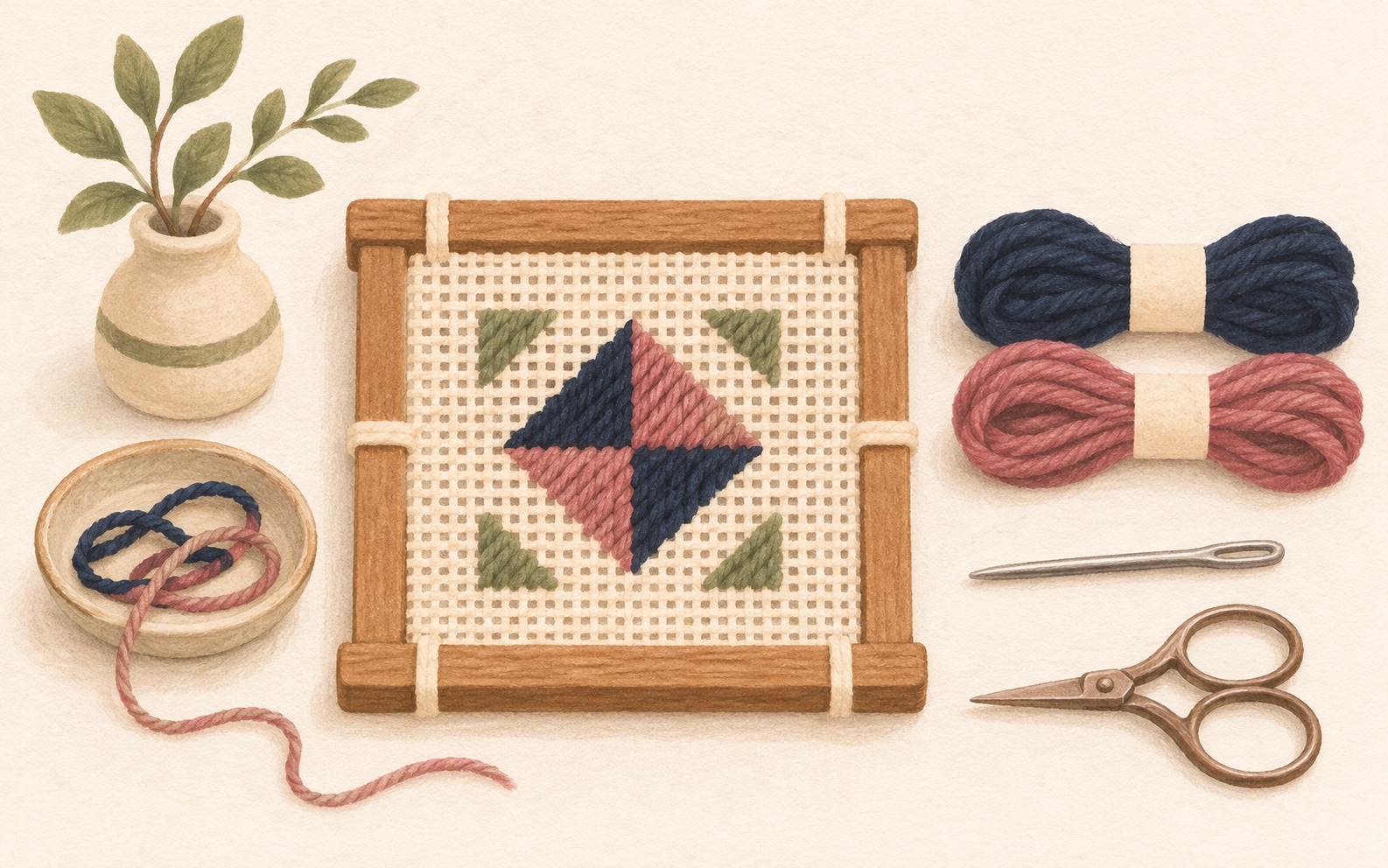
Learning path
Your first needlepoint canvas: a learning path
Follow a linked beginner path from choosing a canvas and planning its finish to starting threads, stitching, and checking your first project.