
Guide
Choosing stitches for windows
Keep tiny needlepoint windows readable with compact stitches, planned mullions, and restrained reflections. Includes a counted window example.
A small window is usually a geometry problem before it is a texture problem. The outside frame, the divisions between panes, and the dark opening all need space. A reflective thread cannot rescue a window whose central bar has disappeared.
Use compact tent stitching for most small windows. It lets you assign color to individual intersections and retain the rectangular shape. Continental tent stitch works well for short lines and small separate areas.
Budget the available positions
Suppose a painted window is seven positions wide. If its left frame, center bar, and right frame each occupy one position, four positions remain for glass: two on each side. That simple count explains why a large decorative repeat will not fit.
The example is a planning grid, not a universal window pattern. Count the actual painted window in both directions before stitching. Make sure its horizontal and vertical divisions leave usable pane areas.
| Element | Priority | A useful restraint |
|---|---|---|
| Outer frame | Keep a clear, continuous shape | Do not thicken it simply because a decorative stitch needs room |
| Center bar | Preserve separation between panes | Avoid adding a second outline beside it |
| Dark glass | Make the opening readable | Use one coherent dark value before adding reflections |
| Reflection | Suggest light on the surface | Use a few placed accents rather than stripes in every pane |
Put reflections in a shared scene
Imagine two adjacent cottage windows reflecting the same pale sky. Put the light accents in corresponding parts of the panes. Random highlights can make them look like unrelated checkerboards. A single pale position or a short light strip may be enough for each pane.
A slightly lighter blue-gray can suggest reflection without metallic thread. If you choose a reflective material, keep the amount modest and its orientation consistent. The material choices in metallic thread and blending filament help distinguish a bright accent from a bulky addition.
At a fixed physical window size, 18 mesh offers more positions for a frame and reflection than 13 mesh. On the coarser canvas, simplify the pane treatment. It is better to have two clear dark panes than four crowded ones that no longer look like a window.
The wall around the frame also affects readability. A busy brick pattern or high-contrast stone joints can overwhelm a very small opening. Use the brickwork planning guide to coordinate those surfaces.
Before adding the final highlights, look at the house from its intended display distance. If the windows are already clear, leave some panes dark. Realistic-looking light depends on contrast and placement; covering every dark area with a bright effect removes the contrast that made the window readable.
Keep learning
Guide
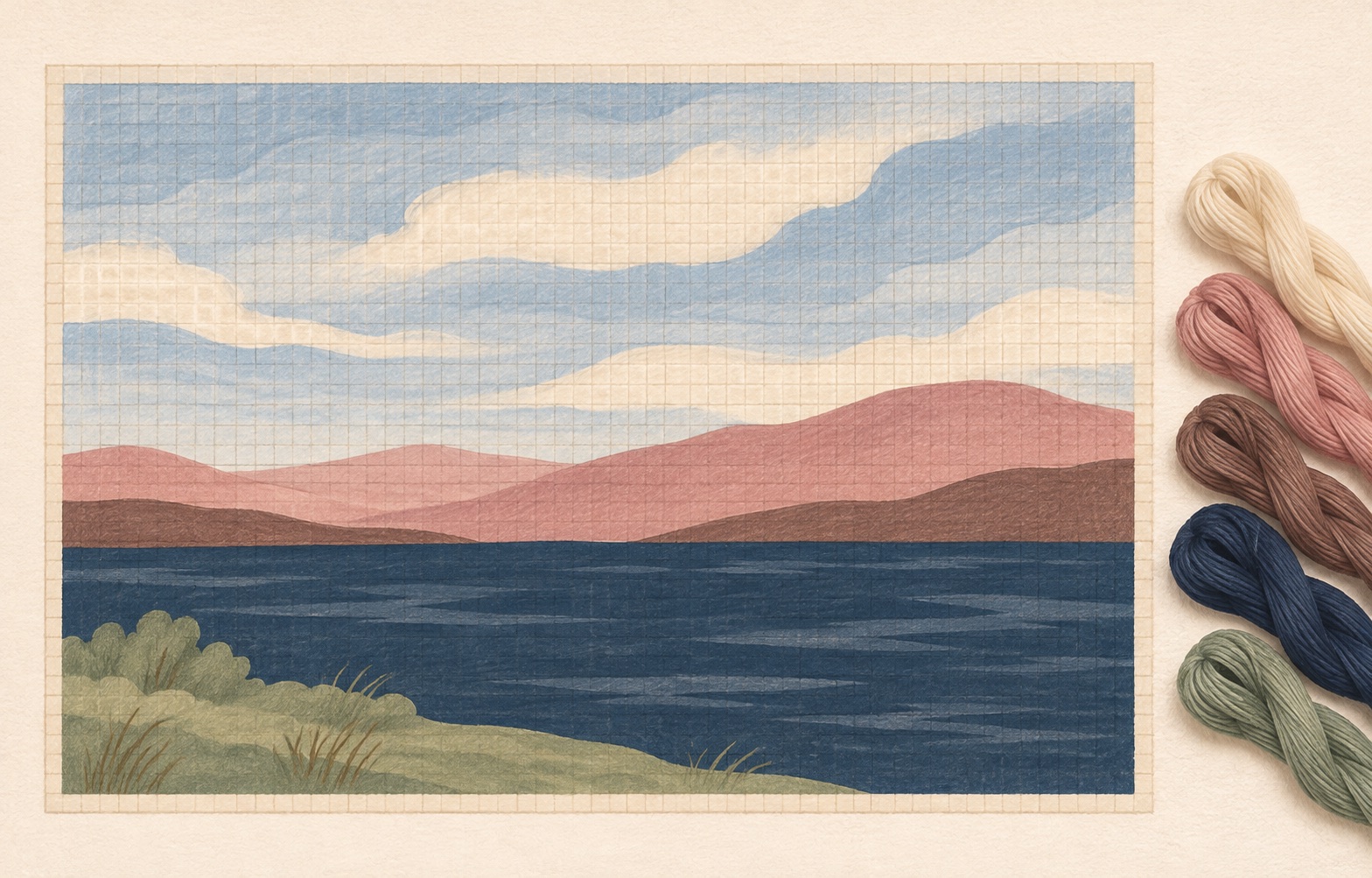
Choosing stitches for water
Choose between tent stitch, mosaic, and horizontal straight stitches for water, with a worked pond and shoreline example.
Guide
Choosing stitches for skies
Compare quiet tent stitch, mosaic, and an open sky treatment, then plan a roofline and cloud without breaking the design.
Learning path
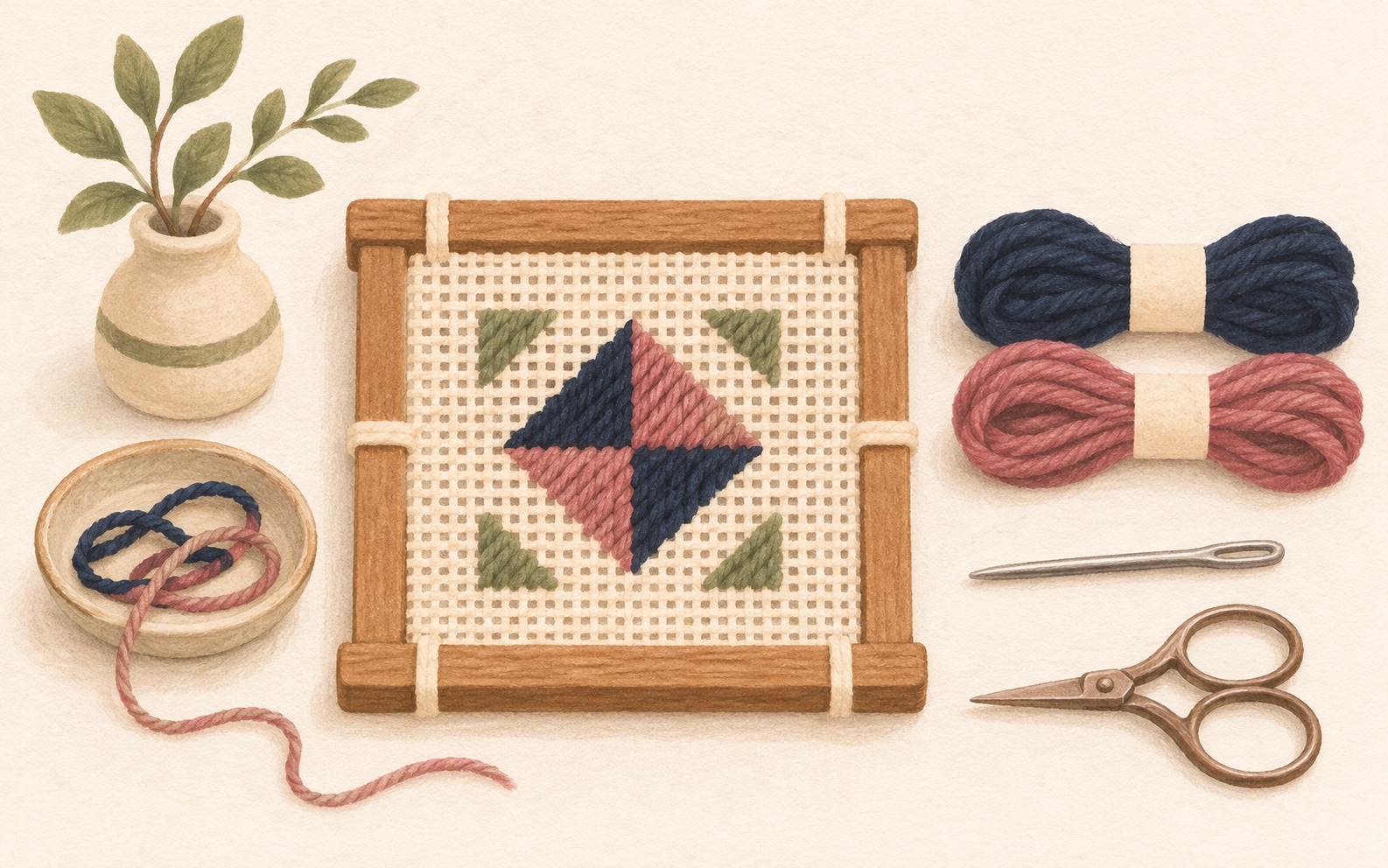
Your first needlepoint canvas: a learning path
Follow a linked beginner path from choosing a canvas and planning its finish to starting threads, stitching, and checking your first project.