
The StitchArt learning library
Build your skills,
one stitch at a time.
Find a starting point, explore stitches and materials, and work through the details that make a project your own.
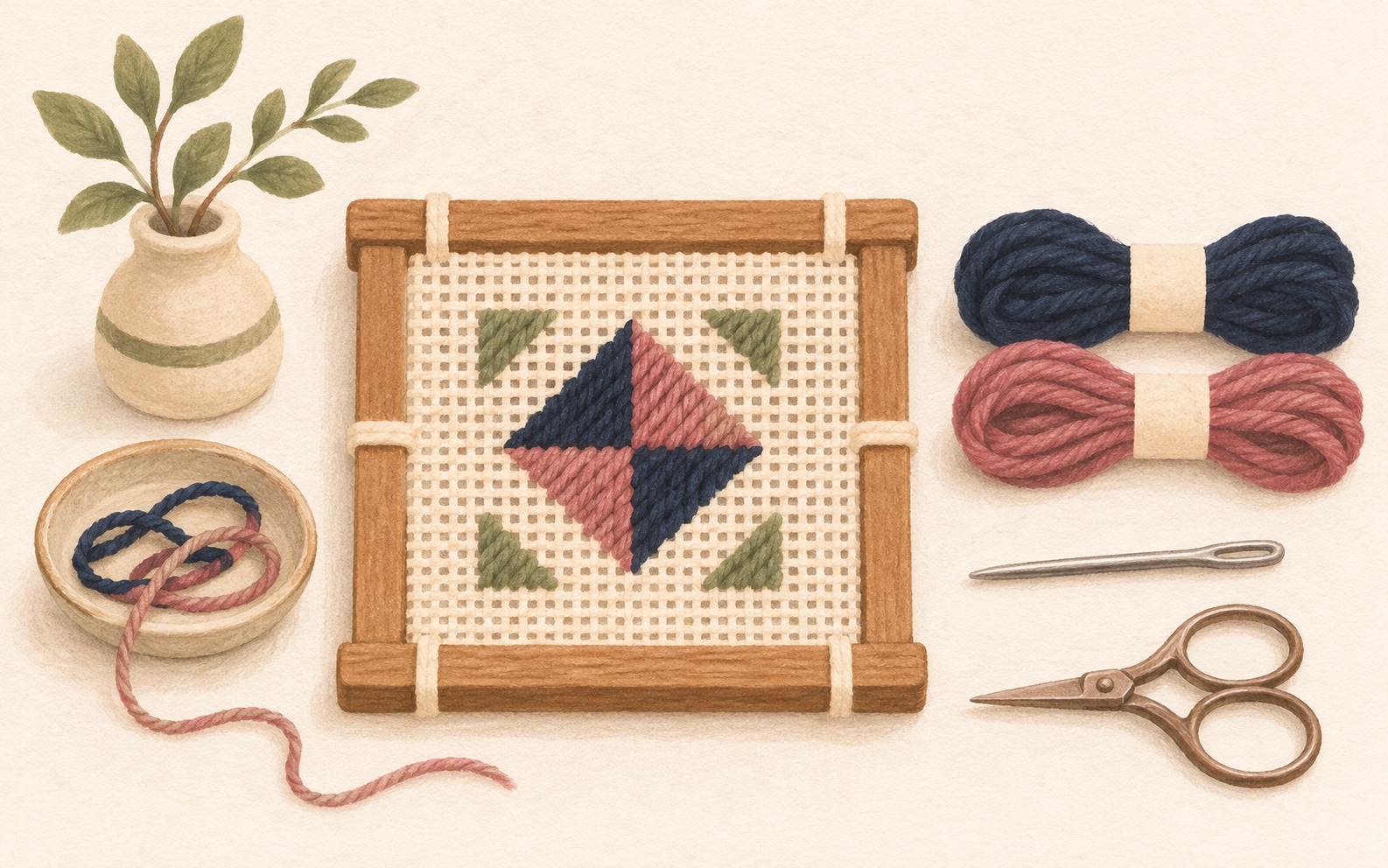
Explore the library
120 articles
Guide
Choosing stitches for faces
Keep needlepoint faces recognizable with compact stitches, planned feature spacing, and restrained shading. Includes a small portrait example.
Guide
Choosing stitches for flower petals
Choose flower-petal stitches that preserve tips, overlap, and shading. Compare compact tent fill with directional texture using a worked tulip example.
Guide
Choosing stitches for food motifs
Choose needlepoint textures for food without losing the design. Includes a strawberry-tart plan and practical choices for fruit, crust, and icing.
Guide
Choosing stitches for geometric borders
Make a needlepoint border fit with counted repeat planning, corner blocks, and balanced remainders. Includes a worked 34-position example.
Guide
Choosing stitches for grass
Plan grass stitches by distance, growth direction, and wear. Compare tent stitch, upright Gobelin, and selective foreground texture on 13 and 18 mesh.
Guide
Choosing stitches for individual leaves
Plan individual needlepoint leaves with clear tips, midribs, and edges. Compare tent stitch with a shaped leaf pattern on 13 and 18 mesh.
Guide
Choosing stitches for long animal fur
Plan long animal fur with compact facial stitches, selective directional texture, and a clear choice between display pieces and objects that get handled.
Guide
Choosing stitches for monograms
Plan a readable needlepoint monogram with balanced strokes, open counters, and a quiet background. Includes a practical initial-and-border example.
Guide
Choosing stitches for roofs
Plan needlepoint roof stitches that preserve ridges and slopes. Work through a two-plane roof, shingle scale, and 13-versus-18-mesh choices.
Guide
Choosing stitches for sand and soil
Choose quiet needlepoint textures for sand and soil. Use a practical beach example to balance tent stitch, mosaic, color variation, and scale.
Guide
Choosing stitches for short animal fur
Choose stitches for short animal fur with a practical face-and-body plan, directional shading, and tips for preserving detail on 13 and 18 mesh.
Guide
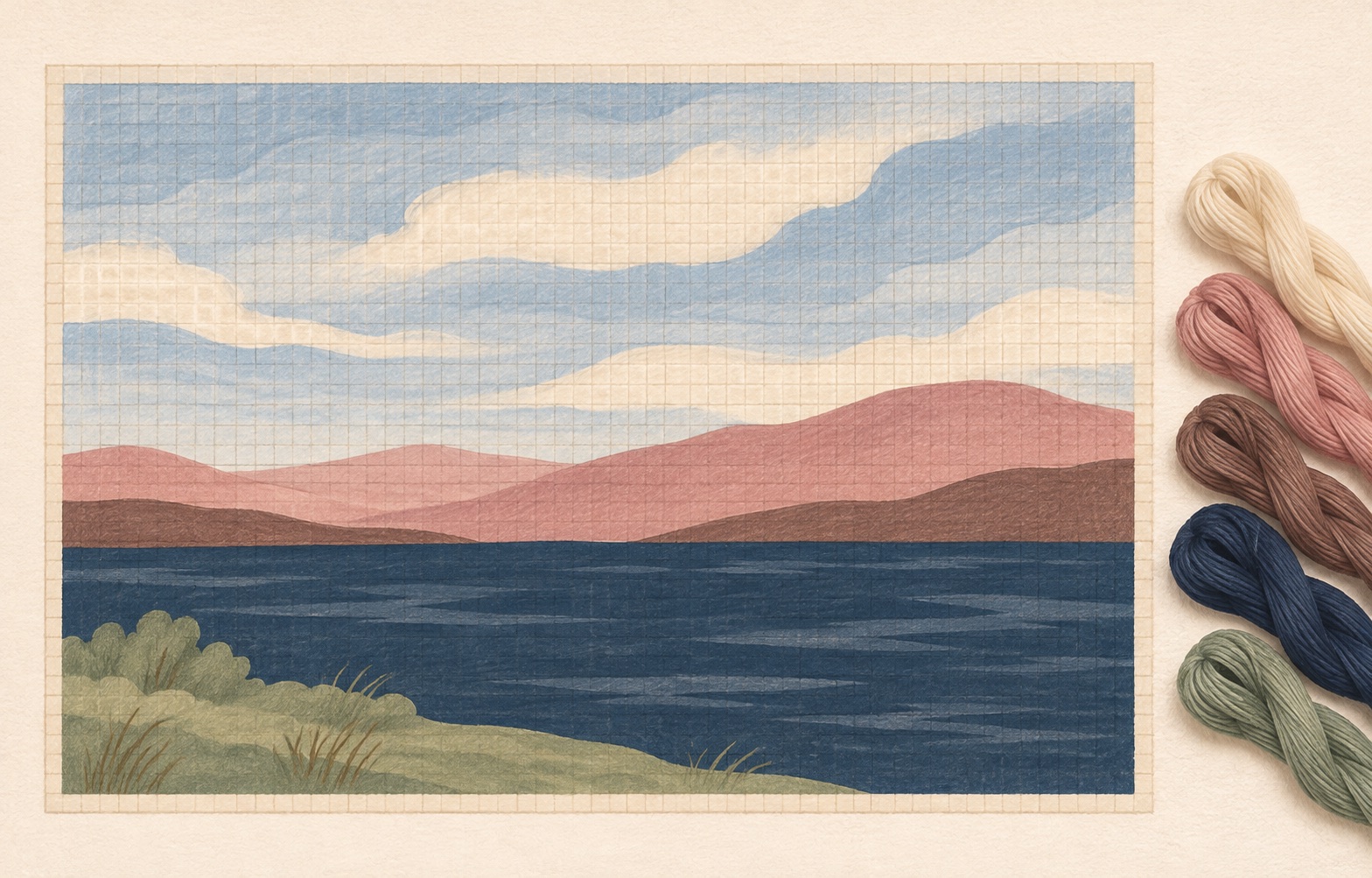
Choosing stitches for skies
Compare quiet tent stitch, mosaic, and an open sky treatment, then plan a roofline and cloud without breaking the design.
Guide
Choosing stitches for snow
Plan needlepoint snow with readable shadows, controlled sparkle, and clear roof or landscape edges. Includes a practical snowy-house example.
Guide
Choosing stitches for stone walls
Choose stone-wall stitches and colors that preserve irregular shapes. Includes a gate-wall plan, mortar choices, and ways to avoid distracting bands.
Guide
Choosing stitches for tiny lettering
Make small needlepoint lettering readable by counting strokes, counters, and spaces. Includes a worked three-letter layout for 13 and 18 mesh.
Guide
Choosing stitches for tree foliage
Choose needlepoint stitches for tree foliage by distance and scale, with a worked landscape plan for tent stitch, mosaic, and leaf-shaped texture.
Guide
Choosing stitches for water
Choose between tent stitch, mosaic, and horizontal straight stitches for water, with a worked pond and shoreline example.
Guide
Choosing stitches for windows
Keep tiny needlepoint windows readable with compact stitches, planned mullions, and restrained reflections. Includes a counted window example.
Guide
Choosing the first area to stitch
Choose a first stitching area using shape size, color boundaries, counting landmarks, stitch order, and the needs of your design.
Guide
Combining several decorative stitches
Balance several needlepoint stitches with a focal-point plan, texture hierarchy, and practical checks for direction, repeat size, and adjoining edges.
Stitch
Continental tent stitch
Learn continental tent stitch with two numbered rows, exact needle movements, a clean return, and a narrow-band example.
Material
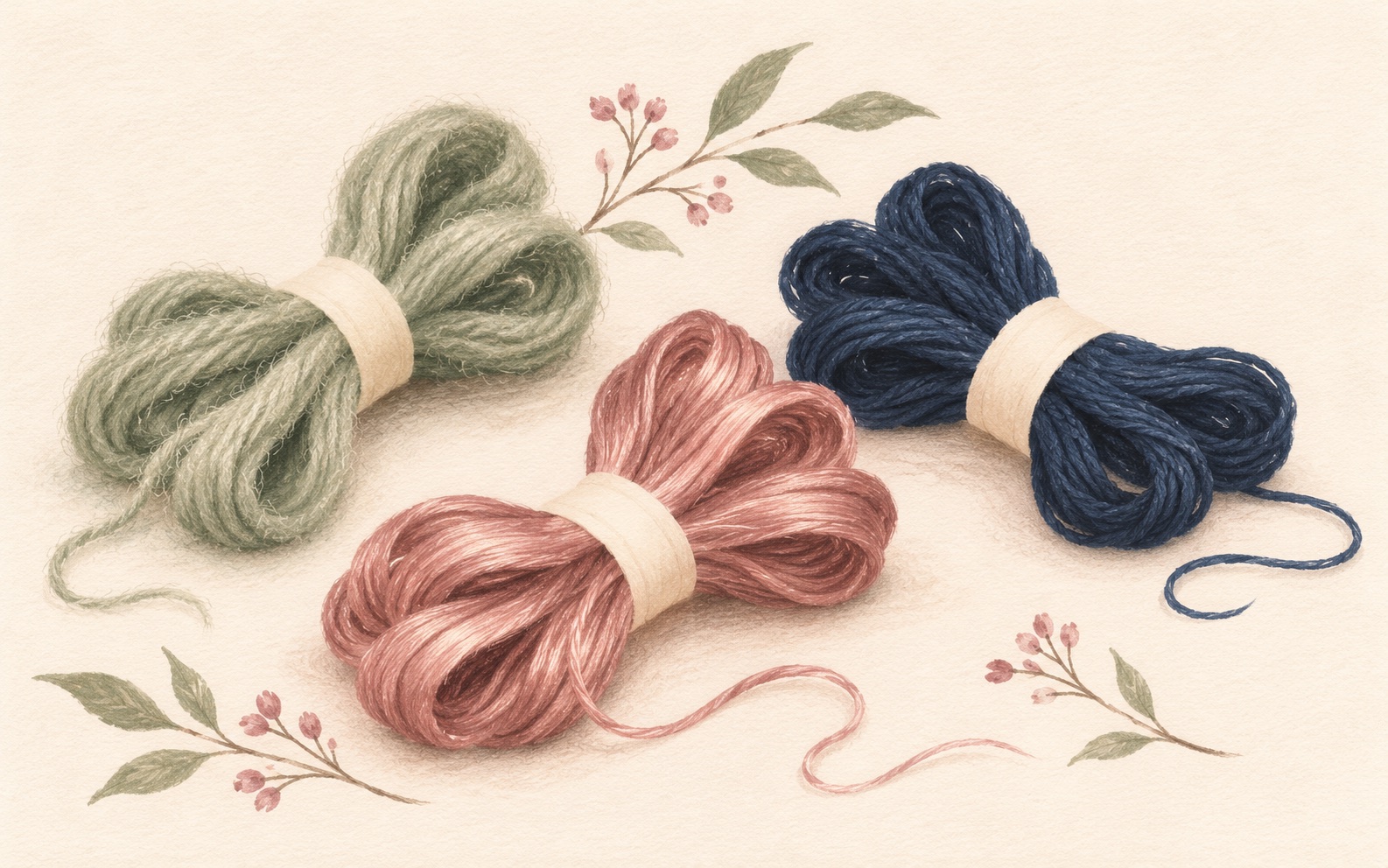
Cotton thread for needlepoint
Compare DMC six-strand floss, pearl cotton, and Soft Cotton, with preparation differences and concrete 13/18 mesh starting choices.
Guide
Counting canvas threads and intersections
Understand holes, canvas threads, intersections, and stitch spans with a clear counting example for needlepoint diagrams.
Guide
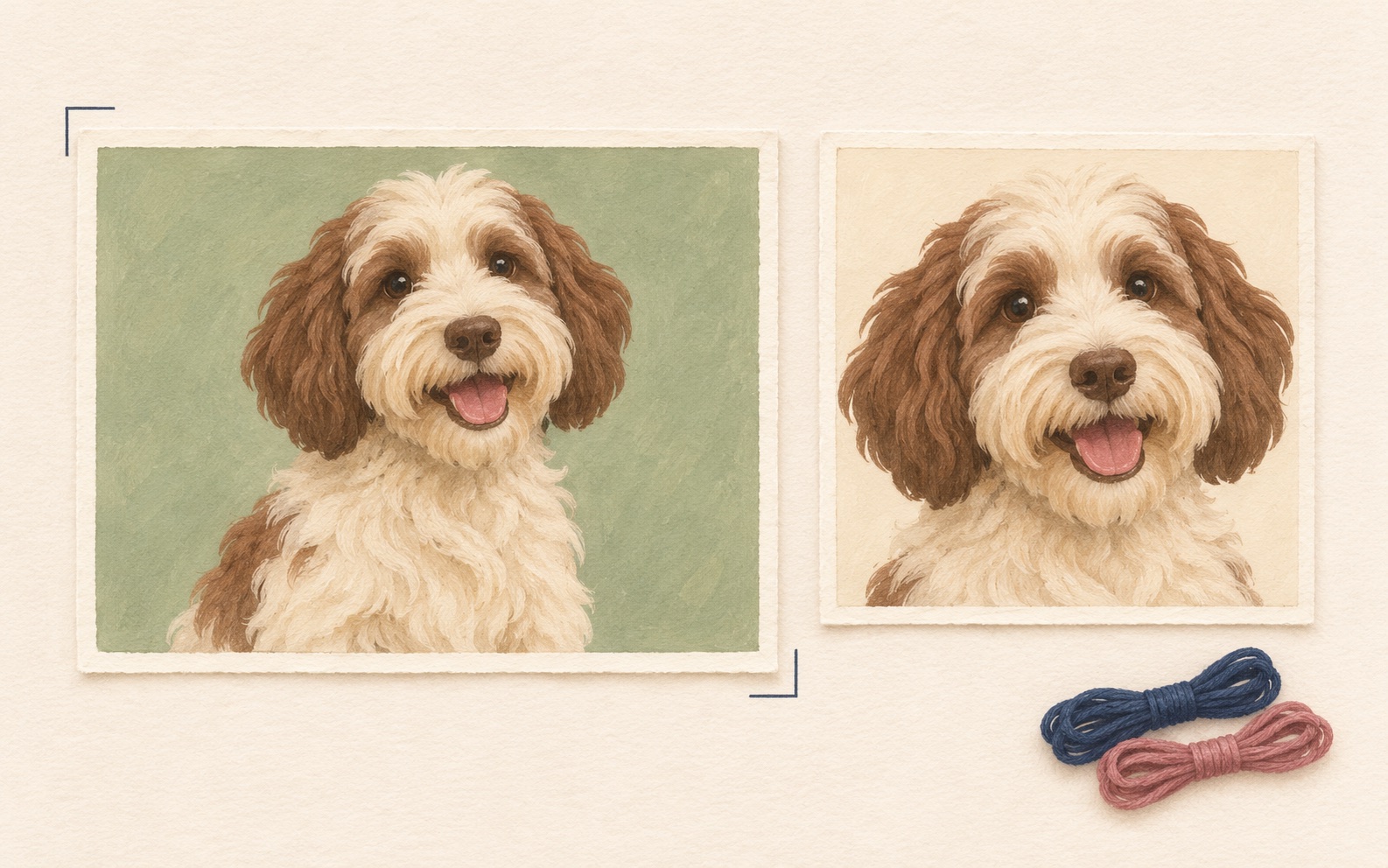
Cropping a portrait for needlepoint
Crop a portrait without stretching it, compare two compositions at the same canvas size, and calculate the space available for facial details.
From your first canvas to a finished piece
Start with the foundations, build a small vocabulary of stitches, learn to shape them at the edges, and plan your finishing from the beginning.
- Your first canvas
- Basic stitches
- Decorative stitches
- Compensation
- Finishing